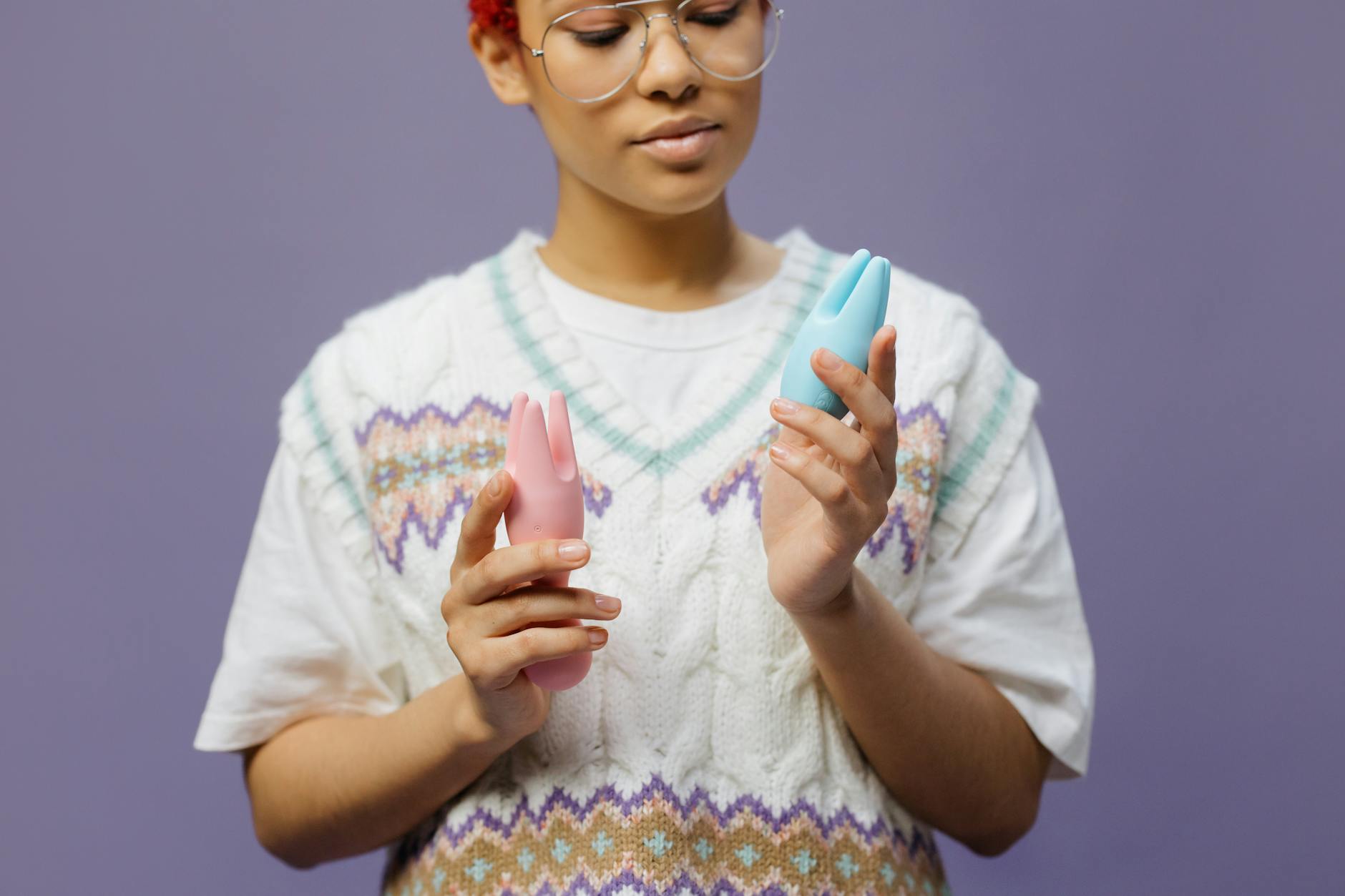
Let's talk about what low sensitivity actually means
Low sensitivity isn't numbness. It's not broken. It's your nervous system's baseline, and understanding that distinction changes everything. Some people's clitorises light up at the gentlest touch. Others need sustained, consistent pressure to cross the threshold into arousal. Both are normal. Neither is better. And yeah, the second group gets tired of hearing "just relax more" as if relaxation physics works that way.
Here's what I've learned from working with hundreds of people navigating this: the problem isn't your body. The problem is usually the tool. Most vibrators hit one intensity and one intensity only. Your sensitivity needs something smarter.
Why sensitivity thresholds exist (and what changes them)
Your clitoral sensitivity is shaped by three things: baseline nerve density (you're born with this), hormonal fluctuations (these shift month to month, year to year), and learned response patterns (your body adapts to what it's been receiving). A lemon vibrator like the Lem works so well for people with lower sensitivity thresholds because of how it delivers stimulation.
Unlike traditional vibrators that use rapid, small movements, clitoral suction devices create a gentle seal and rhythmic pulse. That pattern doesn't rely on lightning-fast vibration. Instead, it builds sensation gradually. For people whose bodies need time to warm up and consistent pressure to reach arousal, this is transformative. You're not forcing your body to respond faster. You're giving it what it actually needs.
Your sensitivity might also shift seasonally, with your menstrual cycle, after certain medications, or during periods of high stress. That's not a malfunction. That's just biology being biology. The key is having a tool flexible enough to match you wherever you are.
How suction stimulation bypasses the sensitivity gap
Think of traditional vibration like tapping on a door. Suction is different. It's more like opening the door slowly while keeping the pressure consistent.
When you use a lemon sucker, the gentle seal against your skin creates a micro-vacuum. As the device pulses, that seal releases and tightens rhythmically. Your nerve endings don't have to decode fast, tiny movements. They're receiving a clear signal: pressure, release, pressure, release. That's why people with lower sensitivity thresholds often report feeling sensation immediately with a lemon vibrator, even when they've struggled with other devices.
The Lem specifically has multiple pattern settings, which matters enormously. Pattern 1 and 2 are slow and gentle. If your body needs time to build arousal, these are your foundation. You're not jumping straight to high intensity. You're starting where your body actually is.
The warm-up window: longer than you think
If you have a lower sensitivity threshold, rushing is your enemy. Budget 20 to 30 minutes before you even turn the device on. This isn't wasted time. This is your arousal system coming online.
Start with what gets you mentally engaged. A fantasy, erotica, audio, time with your partner, or just the anticipation of pleasure. Let your mind land somewhere that generates interest. Your body will follow, sometimes slowly. That's fine. You're not trying to force sensation. You're creating the conditions for it.
Once you're mentally in it, use your hands first. Touch your chest, your neck, your inner thighs. Slow, exploratory touches. You're teaching your nervous system that pleasure is coming. When you finally reach for the Lem, you won't be starting from zero.
Starting the device on the right setting
This is crucial: begin on the lowest pattern, lowest intensity. For most people with lower sensitivity, that's pattern 1 on the Lem. Hold the device against your clitoris gently. Not pressing hard. Just resting it there. The whole point of suction is that you don't need to apply force.
What you're looking for isn't intensity. It's consistency. Let the gentle pulse work for 2 to 3 minutes before you shift anything. Your nerve endings are registering the stimulus. Your body is beginning to respond. Don't interrupt that by chasing more sensation.
After a few minutes, if you're feeling some build, move to pattern 2. Still slow. Still predictable. You're not chasing a peak. You're building gradually upward, letting your body find its own rhythm.
Technique: the pause-and-return method
Here's a game-changer for people with lower sensitivity thresholds. Use the device for 2 to 3 minutes. Stop. Return to manual stimulation with your hands for 30 seconds. Feel the difference. Let sensation settle. Then return to the device.
Why? Constant stimulation can feel flat when your threshold is lower. Your nervous system adapts to unchanging input. By pausing and switching, you're resetting that adaptation. When you return to the device, sensation feels fresher. Sharper. More present.
This rhythm, pattern, pause, return, builds toward orgasm without demanding that your body perform on a timer. You're working with your nervous system's actual speed.
What to do if nothing's happening
Stop the self-blame first. If you've given yourself 30 minutes, used the device correctly, and nothing is building, you're not broken. One of four things is usually happening: your mind isn't really in it, you need more foreplay time, the patterns on this device aren't matching your body's preference, or external stress is dampening sensation.
Mind check: Are you actually turned on mentally, or are you checking the box? Pleasure doesn't happen through force. If you're not genuinely interested in whatever you're using for mental arousal, your body won't respond. Switch. Read something different, watch something different, think about something different. Your mind leads. Your body follows.
More foreplay time: Give yourself 40 minutes instead of 30. Some bodies just need longer to heat up. That's not a deficit. That's your actual rhythm.
Different patterns: The Lem has 3 patterns. Try pattern 3. Sometimes lower sensitivity actually responds better to faster stimulation than people expect. You won't know until you explore.
Stress check: Are you dealing with relationship tension, work crisis, health anxiety? Those absolutely suppress sensation. On high-stress days, pleasure sometimes won't arrive no matter what you do. That's not device failure. That's your brain protecting you. Put the device away. Come back tomorrow.
Building lasting sensation improvement
Here's what actually shifts sensitivity over time: consistent, pressure-based stimulation with lemon clitoral vibrators. Not once. Repeatedly, over weeks.
When you use the Lem regularly in this way, your nervous system gets smarter about registering sensation. The pathways strengthen. What took 30 minutes in week one takes 20 minutes in week three. Orgasms that felt distant become more accessible.
This is especially true if you're also rebuilding sensation after nerve damage or working with medications that affect arousal. The device isn't a magic fix. It's a tool that helps your body remember and strengthen its own capacity for pleasure.
When to shift your approach entirely
If you've used the device correctly for 6 weeks and sensation still isn't improving, something else might be at play. Check your medications. Certain SSRIs, blood pressure drugs, and hormonal medications absolutely suppress sensation. Talk to your doctor about whether alternatives exist.
Also consider: are you in a relationship where pleasure feels unsafe? Does stress or tension live in your body? Sometimes low sensitivity isn't physiological. It's protective. Your nervous system is dampening sensation because some part of you doesn't feel safe to be fully present. That's not a vibrator problem. That's a healing or relationship problem. Those matter more.
For some people, exploring sensitivity thresholds during major life transitions actually opens doors they thought were closed. The sensitivity isn't really lower. It was just temporarily masked.
The pleasure permission piece
I see this over and over: people with lower sensitivity thresholds rush because they feel like they should already be done. "Normal" pleasure supposedly happens faster. So you force it, which guarantees it won't arrive. Your nervous system can tell when you're pushing.
Give yourself permission to take the time your body actually needs. That's not a flaw. That's honoring your actual physiology. A lemon vibrator is built for this. For the people who need patience, consistency, and pressure over speed. You're not broken. You're just you.
People also ask
What's the difference between low sensitivity and no sensation at all?
Low sensitivity means your body registers stimulation, but the threshold is higher. You feel something. It just takes more time or consistent pressure to build toward arousal. No sensation (or extreme numbness) suggests nerve damage, certain medications, or hormonal absence. If you genuinely feel nothing even after 30 minutes of direct stimulation, talk to a doctor. Low sensitivity is totally manageable with the right technique. Numbness might need medical attention.
Can I make my sensitivity "normal" permanently?
Sensitivity isn't broken, so you're not aiming to "fix" it to some imaginary normal. What you can do is strengthen the nerve pathways you have. Regular stimulation with a device like the Lem builds responsiveness. That doesn't rewire your baseline threshold. It builds your skill at working with the body you actually have. After a few months of consistent use, most people report orgasms feeling more accessible and intense. That's not changing your sensitivity. That's deepening your capacity.
Is it normal to need 30+ minutes with a vibrator?
Completely normal. Magazine articles and porn have convinced people that 5 to 10 minutes is standard. It's not. Plenty of people, especially those with lower sensitivity, need 30, 40, or even 60 minutes to reach orgasm. Your timeline is your timeline. There's zero shame in that. The Lem's multiple patterns are designed for exactly this kind of extended, gradual build.
Does using a lemon vibrator regularly change your sensitivity over time?
Yes, but not in the way you might think. You're not gradually building toward needing more intense stimulation. You're training your nervous system to recognize and respond to the stimulus pattern more efficiently. After weeks of use, arousal arrives faster and orgasms often feel stronger. That's adaptation in the best direction.
What if my partner has a higher sensitivity threshold than mine?
That's actually common and totally manageable. You might benefit from extended warm-up time together before bringing in a device. Some couples find that one partner uses a lemon clitoral vibrator while the other uses a different toy or technique. The Lem's gentle suction pattern also works well for partnered use if you're comfortable with that. Communication about timing and pacing matters way more than assumption.
Can anxiety about taking too long make sensitivity worse?
Absolutely. The moment you start timing yourself or worrying that something's wrong, your nervous system hits the brakes. Pleasure doesn't happen under pressure. It happens when you let go of the outcome. For lower sensitivity, this is even more critical because you already need more time. Adding performance anxiety on top guarantees nothing will happen. Release the timeline. Give yourself permission to take whatever time your body needs.
The actual takeaway
Low sensitivity isn't a puzzle to solve. It's information about how your nervous system works. A lemon vibrator, specifically one designed with multiple patterns like the Lem, lets you work with that threshold instead of fighting it. Start low. Go slow. Be patient. Return to the device after pauses. Give yourself 20 to 30 minutes. And trust that your body knows what it's doing.
If you have questions about what might be right for your specific situation, we're here. Reach out at /contact and let's talk through what you're experiencing. Your pleasure matters, and you deserve a tool that honors how your body actually works.