Let's start with the honest part
You can't talk to your partner about sex. Not really. Maybe you've tried and it turned into defensiveness. Maybe you've never tried because you know how it would go. Maybe the words just don't exist in your relationship's vocabulary, and the thought of introducing them feels riskier than staying quiet.
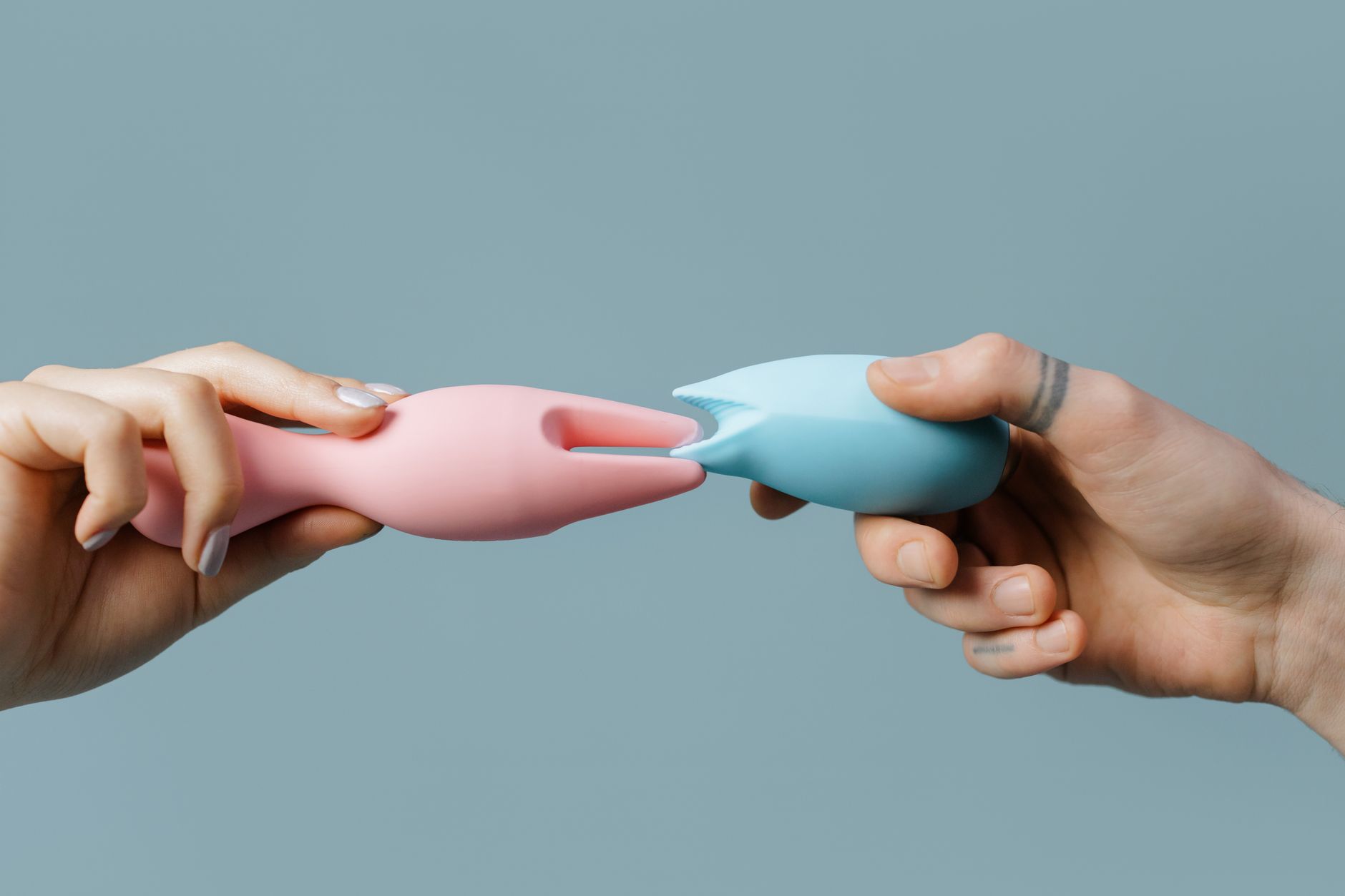
Here's the thing: sometimes the conversation doesn't come first. Sometimes you need a shared experience, a physical reference point, something to gesture toward when words fail. A lemon vibrator, used thoughtfully with your partner, can be exactly that.
Why communication about sex gets stuck
Most couples don't have a framework for talking about pleasure. We talk about logistics ("Tuesday?"), we talk around desire ("I'm tired"), we sometimes talk about problems ("This doesn't feel good"). But we almost never talk about what we actually want, what we're curious about, or what makes us feel good. The silence hardens over time.
Add vulnerability to that equation and it gets worse. Bringing a toy into the conversation means admitting you want something different, that what you're doing now isn't enough, or that you need help. That's scary. For some partners, it lands as criticism. For others, it triggers shame. So you don't say anything.
But here's what research on couples and sexual satisfaction shows: avoidance doesn't protect the relationship. It erodes it. The gap between what you want and what you're doing grows. Resentment follows. A tool like a lemon clitoral vibrator, introduced with care, can interrupt that pattern before it deepens.
How a vibrator becomes a conversation starter
The trick is shifting from "I want to introduce this" to "I want to try this together." That's not semantics. It's the difference between you wanting something and you both wanting to explore.
Here's one approach: frame it around curiosity, not complaint. "I read about these and I'm genuinely curious what they feel like." Or: "I've been thinking about what would make things feel better for both of us." You're not saying your partner isn't enough. You're saying you both deserve to feel good.
Start small. You don't need to launch into a philosophical speech. Sometimes the easiest conversation happens sideways, after you've already shown them what you mean. A lemon vibrator is simple, not intimidating, and the sensation is so distinct that it actually gives you something concrete to talk about afterward.
Using the Lem when one partner is hesitant
Let's say your partner isn't ready to touch it. That's fine. You can explore it yourself, first, while they're present. Not as a performance. As research.
Try this: take time together in bed. Use the vibrator on yourself at a low setting. Pay attention to what feels good. Let them see that you're enjoying something, that pleasure is real and worth pursuing. You're modeling a relationship to your own body that gives them permission to care about theirs.
Many partners who were anxious about a toy become curious once they see how differently their partner responds. Pleasure is contagious. When your partner watches you have a good orgasm with the help of a tool, the threat they imagined often dissolves. You're not replacing them. You're expanding what's possible.
If they're still resistant, don't push. But do say: "I enjoyed that. I'd like to keep using this, and I'd love for you to be part of that whenever you're ready." You're protecting your own curiosity without weaponizing theirs.
The conversation that happens after
After you've used a lemon clitoral vibrator together, or even solo with them nearby, something shifts. You have a new reference point. You can say "That felt different than usual," and they know what you mean. You can ask "Did you notice that?", and suddenly you're discussing sensation in a way you weren't before.
This is where real communication begins. Not in the planning phase, but in the reflection. "What did you think of that?" opens a door. "I want to try it on you," opens another. "Would you use it with me?" opens a third.
These conversations are so much easier after you've already done the thing. The mystery is gone. You're not hypothesizing anymore. You're remembering an actual experience and building on it.
When a partner wants to watch but not participate
Some people are aroused by witnessing their partner's pleasure without engaging directly. That's legitimate. If your partner wants to watch you use a vibrator but doesn't want to touch it, that's a workable scenario. You're still in connection, still intimate, still present with each other.
Set boundaries that feel good to you. Maybe you want them to touch you somewhere else. Maybe you want eye contact. Maybe you want to pause and connect afterward. You get to decide what that looks like.
The key is that they're choosing to be there, to witness, to participate in your pleasure even if not in the way you initially imagined. That's communication happening through presence, not words.
What to do if shame shows up
Sometimes, even with the best intentions, shame appears. Your partner might feel emasculated. They might feel judged. You might feel embarrassed for bringing it up at all.
Shame is not a signal to stop. It's a signal to slow down and address what's underneath it. This is where talking actually becomes necessary. "I notice you seem uncomfortable. That's not what I want. Can we talk about what came up for you?"
That conversation is harder than showing them a vibrator, yes. But it's also the one that transforms the relationship. Because now you're saying: "Your feelings matter. Your experience matters. We figure this out together."
Often, what looks like resistance to a toy is actually fear about intimacy, aging, competence, or being seen. The toy isn't the real issue. But it can be the key that unlocks it.
Building a shared language over time
One session with a lemon vibrator doesn't fix a communication problem. But it begins to prove that sex can be different from how it's been. It proves that curiosity is safe. It proves that pleasure matters.
Over time, you'll have more conversations. Some will still be hard. But you'll have a body of shared experience to reference. You'll know that your partner can surprise you. That you can surprise them. That change is possible.
When partners finally start talking about sex, they often say the same thing: "I wish we'd started this sooner." Not started using a toy sooner necessarily. Started expecting that pleasure, communication, and exploration were possible at all.
A lemon clitoral vibrator isn't a marriage counselor. But it can be the opening move. It can be the gesture that says: "Let's try something different together." And sometimes that's enough to begin.
FAQ
What if my partner thinks using a vibrator means I'm not satisfied with them?
That's a reasonable fear, and it deserves a direct answer. You could say something like: "This isn't about you not being enough. It's about me wanting to explore what feels good, and I want to do that with you." The distinction matters. You're not comparing. You're expanding. A lemon sucker doesn't replace what your partner does. It adds texture, sensation, and novelty. Those things make sex better for both of you.
Can I use the Lem if my partner refuses to acknowledge it exists?
Yes. Your pleasure is not contingent on your partner's comfort level. That said, using a vibrator secretly, and then hiding it or being evasive about it, usually creates more distance. If your partner won't engage, you can still use the tool. But consider having one conversation: "I'm going to keep using this because it matters to me. I'd prefer you were part of that, but I need you to know it's happening." That honesty is its own form of communication.
How do I introduce a lemon vibrator if we've never talked about toys before?
Start by creating a low-pressure moment. Don't ambush them mid-intimacy. Maybe show it to them outside the bedroom first: "I ordered this. I'm curious about it." Answer questions. Let them hold it. Take the mystery out before you take it to bed. Some partners warm up once they see the actual object instead of imagining something.}
What if my partner wants to use it, but I'm uncomfortable with that?
Then you have a conversation about that too. "I'm excited you're interested, and I'm also feeling some anxiety. Can we slow down?" Your boundaries matter as much as theirs. Maybe you use it solo first. Maybe you use it together but in a specific way. Maybe you need reassurance about something. The communication part is actually more important than the vibrator part.
Does using a lemon vibrator mean our relationship is in trouble?
No. Research shows that couples who communicate about sexuality and explore new sensations together actually report higher satisfaction and longer-lasting desire. Couples who stick with the same routine, never asking what would feel better, are the ones at risk. A vibrator is often a sign that you're willing to invest in your sex life. That's healthy.
If communication is really hard, should we see a couples therapist first?
Not necessarily before. Sometimes you need permission, tools, and new experiences before therapy makes sense. A vibrator can actually be that permission. It can open a door that therapy then walks through. That said, if you've tried to talk about this and it ends in arguing, fighting, or one partner completely shutting down, then yes, a therapist can help you build the skills you need. They're not mutually exclusive.
The actual next step
If you're thinking about bringing a lemon vibrator into your relationship, you don't need a perfect plan. You need curiosity, a willingness to be a little vulnerable, and the belief that your partner deserves pleasure as much as you do.
The conversation doesn't have to be eloquent. It can be messy. It can start with "I've been thinking," and end with a question mark. What matters is that you're moving from silence to sound, from assumption to discovery.
If you're stuck on how to actually start the conversation, our FAQs have some language starter kits. And if you need to explore what you want before involving your partner, there's no shame in that either. Solo exploration with a lemon clitoral vibrator can teach you things about yourself that then become easier to share.
Your pleasure matters. Your partner's pleasure matters. And the conversation that connects you both to that shared goal is always worth having.