The conversation nobody wants to have
One of you is more into sex than the other. It's not dramatic. It's not a dealbreaker. But it sits there between you like a piece of furniture you've learned to work around instead of moving.
Here's the tricky part: when desire mismatches exist, introducing toys can feel loaded. Like you're trying to solve a relationship problem with a purchase. The lower-desire partner worries it's pressure. The higher-desire partner worries it's rejection. A lemon vibrator changes the equation because it's not about convincing anyone to want more sex. It's about pleasure that doesn't require negotiation.
Why desire mismatch feels different than you think
Most couples assume unequal desire is about one person being broken or insufficiently attracted. That's almost never true. Desire mismatch happens because arousal works differently for different nervous systems, life stages, stress loads, and bodies.
The person wanting less sex isn't lazy or unloving. They might need longer warm-up, more mental space, less daily stress, or a different kind of touch. The person wanting more isn't being unreasonable. They might express love through sex, or they just have a higher baseline libido. Both things are normal.
The problem isn't the mismatch. The problem is what happens when you try to solve it by making the lower-desire partner perform more. That creates resentment, obligation, and usually less sex overall.
A lemon vibrator works because it flips the frame. Instead of negotiating frequency, you're creating space for independent pleasure. And that changes everything.
What changes when you introduce a clitoral vibrator
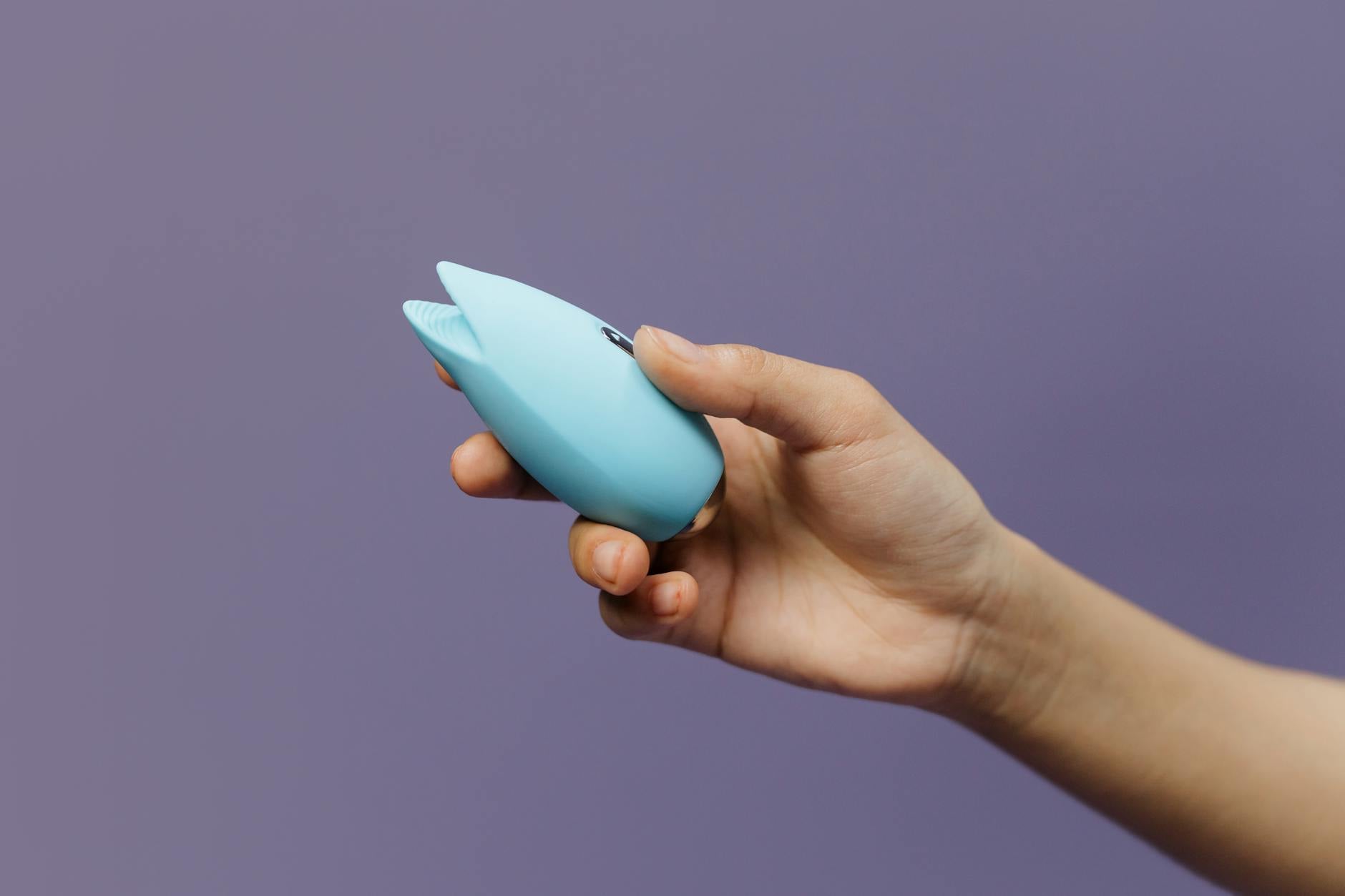
Let me be specific about what I mean. A lemon clitoral vibrator like the Lem uses suction, not vibration. That matters because suction is less demanding on the body. You can use a suction toy solo, in about 5-15 minutes, without a partner present. That's mechanically and emotionally different from partnered sex.
For the partner with lower desire, this means: "I can have an orgasm when I want one, with the intensity I want, without having to coordinate with someone else's body or timeline." That's freedom. It also means the pressure to perform on demand lifts.
For the partner with higher desire, this means: "My partner is having pleasure regularly and independently. I'm not the only source of that." That's relief.
Neither person is using the toy to replace the other. They're both using it to regulate their own nervous system and access their own pleasure without making it contingent on someone else's capacity in that moment.
The conversation before you buy anything
This is crucial and most couples skip it. Don't.
Sit down separately from any sexy context. Say something like: "I've been thinking about desire being different between us, and I don't want that to mean one of us is failing. I want to explore ways we both feel good without it being about convincing you to want what I want."
Then listen. Actually listen, without defending. The lower-desire partner might say: "I feel pressure when you initiate. I get in my head about whether I'll be able to come." Or: "I do want sex but I need way longer to get there." Or: "I'm stressed and my body shuts down." These are different problems with different solutions.
Some might be about toys. Some might be about timing. Some might be about stress or health. You don't know until you ask.
Once you both understand the real constraint, you can propose a lemon vibrator not as "we need this to fix us" but as "what if you had a tool that worked on your timeline, and I knew you could access pleasure when you needed it?"
How to use a lemon vibrator when desire is unequal
Three scenarios, because they're different:
Scenario 1: Solo use, no partner present. The lower-desire partner uses a lemon clitoral vibrator alone, on their own schedule, with zero pressure to perform or prove anything. This is permission. They're not doing it for someone else. They're doing it because they want an orgasm and they have a tool that works. This is the most important use case. When the lower-desire partner has a reliable way to access their own pleasure, they stop resenting sex with their partner.
Scenario 2: Solo use while your partner is near. They're in another room, or on the other side of the bed. You're both having pleasure at the same time without directly touching. This creates parallel intimacy instead of dependent intimacy. Both people are getting what they want simultaneously instead of one person waiting for the other to be ready.
Scenario 3: Partner-assisted use. This is the riskier one and I'd save it for last. One partner uses the lemon vibrator while the other touches them, talks to them, or just watches. This only works if there's zero expectation attached. If the lower-desire partner senses even a whisper of "now that you're turned on, will you have sex with me," it dies. The whole point is that pleasure is the endpoint, not a stepping stone.
Most couples find that Scenario 1 solves the problem faster than the others. When the lower-desire partner is having regular, reliable orgasms solo, the relationship tension drops. They feel more sexual. They initiate more. Not because they've been convinced to want more sex, but because they're accessing their own pleasure regularly and remembering why it matters.
The timing piece matters more than you think
Unequal desire often has nothing to do with attraction and everything to do with readiness. The lower-desire partner might be completely open to sex but need 45 minutes of mental transition first. A hot shower. Some time alone. Music. A conversation that isn't about sex.
A lemon vibrator can fill that gap. They use it, get turned on, and when they're genuinely aroused, they might want their partner. Or they might be satisfied and just want to sleep. Both are fine.
The higher-desire partner needs to understand this isn't a test. It's not: "If you can come with the toy, you should be able to come with me." Different stimulation, different context, different pressure. Your brain treats them differently.
What unequal desire actually requires
Toys help, but they're not the whole answer. Desire mismatch requires four things:
First, the higher-desire partner accepting that their partner's lower desire isn't a personal rejection. It's wiring. Second, the lower-desire partner accepting that their partner's higher desire isn't neediness. It's wiring too. Third, both people committing to pleasure being independent sometimes, not always coordinated. Fourth, checking in regularly about whether this is still working or whether something has shifted.
When you use a lemon clitoral vibrator in this context, you're not bypassing the relationship work. You're creating space for it. The tool removes some of the pressure so the actual conversation can happen.
When to bring in a therapist
If the desire gap is accompanied by contempt, control, or refusal to talk, a toy won't help. That's a relationship problem that needs someone trained in it. Go see a couples therapist, preferably one trained in the Gottman Method, which has specific protocols for desire mismatches.
If one partner is pushing the other into sexual situations they don't want, or if there's any coercion present, toys are the wrong answer. Get support first.
But if this is just a normal difference in how often you both want sex, and you're both willing to work on it? A lemon vibrator can genuinely change the dynamic.
People also ask
Is using a vibrator cheating if I use it when my partner wants sex and I don't?
No. Using a vibrator solo is not cheating any more than masturbating is. Your body belongs to you. Your pleasure belongs to you. If your partner sees independent sexual pleasure as betrayal, that's a separate conversation about control and trust that goes beyond the toy.
Will my partner feel replaced if I prefer the vibrator to sex with them?
Possibly, if you let them. This is where communication matters. A lemon clitoral vibrator is fast and efficient. Sex with your partner is different. It has intimacy, vulnerability, and presence that a toy doesn't. If you're using the vibrator because partnered sex feels like work, you have a different problem. If you're using it because you want orgasms on your timeline, that's normal and healthy.
How often should I use a lemon vibrator if we have unequal desire?
As often as you want. There's no threshold where it becomes "too much." Some people use it twice a week. Some use it daily. The point is you have access to pleasure whenever you need it, so you're not relying on your partner's desire to match yours.
Can we use a lemon vibrator together if they have higher desire than me?
Yes, but not as a solution to the mismatch. Use it as part of partnered sex if you both want to. Just don't treat it as a way to keep up with their desire. You still get to have your own rhythm. The vibrator is an addition, not a performance requirement.
Should I tell my partner I'm using a vibrator if we have desire mismatch?
Yes. Secrecy creates the exact resentment a toy is supposed to prevent. Say something like: "I want to have regular orgasms on my own schedule so I feel better in our relationship. I'm going to use a toy. I wanted you to know." If they get upset, that's worth talking through. Most partners are relieved.
What if my partner wants to use it but I don't think they have low desire?
Desire isn't the only reason to use a vibrator. Some people use them because they want faster orgasms, or different sensations, or just because it feels good. A lemon clitoral vibrator is worth trying regardless of your desire level. Let them explore without making it about the mismatch.
What actually shifts
Here's what I've seen happen when couples introduce a lemon vibrator into a desire-mismatch situation: the pressure dissolves first. Then the lower-desire partner stops feeling guilty. Then the higher-desire partner stops feeling rejected. Then, about 60% of the time, desire starts to match more naturally because it's not being negotiated anymore.
The other 40% of the time, desire stays unequal, but it stops mattering. Because both people are having regular pleasure, the gap feels less like a problem and more like just a difference.
Your desire mismatch might not disappear. But the story you tell yourself about it can change. And that changes everything.
If you're navigating unequal desire and want to talk through what might work for your specific situation, reach out to us. We're here to help.