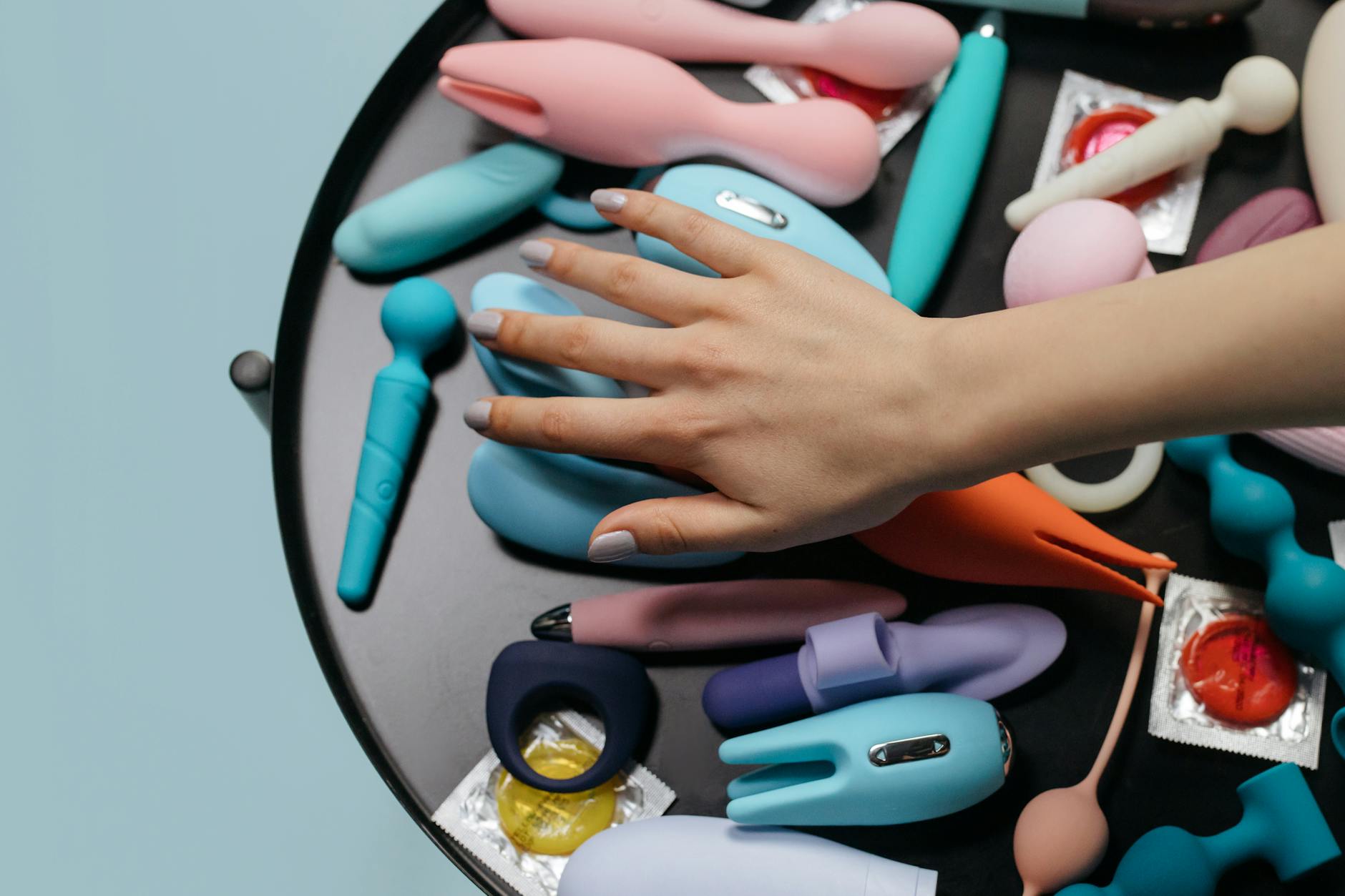
How to Use a Lemon Vibrator During Partnered Sex
Let's be real. The moment you mention bringing a toy into bed, something shifts. Your partner might feel replaced. You might feel exposed. The whole thing gets weird before it even starts.
Here's the thing: it doesn't have to be. I've worked with hundreds of couples who've integrated lemon vibrators and other clitoral toys into their sex lives, and the ones who do it well share one thing in common. They talk about it first, without shame and without pressure.
This guide walks you through exactly how to do that, plus the practical positioning and timing that actually work in the moment.
The conversation that comes before the toy
Don't spring a vibrator on your partner mid-intimacy. That creates resentment, not arousal. The conversation needs to happen outside the bedroom, when you're both clothed and calm.
Start with your own truth, not a request. "I've been thinking about exploring sensation a bit differently, and I'm curious what you think" lands differently than "I need a vibrator to orgasm." The first opens a door. The second triggers comparison and inadequacy.
Be specific about what you want. Not "I want to use toys," but "I'm interested in trying a lemon clitoral vibrator, something like the Hello Nancy options, because I want to experience a different kind of sensation with you, not instead of you." The specificity shows you've actually thought this through, not just Googled it in frustration.
Then listen. If your partner expresses hesitation, ask why. Often the fear isn't about the toy. It's about what the toy means. "Does this mean you're not satisfied?" "Are you going to prefer it to me?" "Will you start preferring solo play?" These are the real questions underneath.
Answer them directly. You're satisfied enough to want more. You're bringing this in because you want to feel deeper pleasure with them, not without them. The vibrator is a tool, like lube or a pillow. It's not a replacement.
Why a lemon vibrator works better than you might think
Unlike wand vibrators or rabbit toys that take up physical space, lemon clitoral vibrators and similar sucking toys are compact and intuitive during partnered sex. They create intense sensation without requiring complex positioning or multiple hand configurations.
The suction mechanism on a lemon vibrator stimulates the clitoris differently than penetration alone does. For people with vulvas, the clitoris has about 8,000 nerve endings concentrated in a small area. Direct penetration often misses that entirely. Adding a lemon vibrator or lemon sucker during partnered sex bridges that gap.
Here's the data shift: about 65% of people with vulvas don't orgasm from penetration alone. It's not a dysfunction. It's anatomy. A lemon clitoral vibrator solves this in a way that feels collaborative, not like a workaround.
Positioning that feels natural, not acrobatic
The biggest mistake couples make is trying to use a vibrator in positions designed for penetration alone. That's when things get clumsy and everyone loses confidence.
Start with positions where you can easily reach your own genitals. That might sound obvious, but it matters. Spooning from behind, where you're facing your partner's back. You can easily reach your clitoris while they're inside you. The lemon vibrator sits neatly between your bodies, no weird angles required.
Missionary with a pillow under your hips works too. You're still looking at each other, and the vibrator sits on your body at the right angle without one of you having to hold it at an uncomfortable reach.
Alternatively, you guide. Your partner can hold the lemon vibrator while you're on top. This puts the control in your hands. You set the pressure and timing, which takes pressure off them to "get it right."
The worst positions: ones where either of you is twisted sideways, or where the vibrator is in the way of movement. Experiment a few times to find what works. This isn't complicated. Awkwardness fades once you've tried it twice.
Timing and rhythm that works in the moment
Don't introduce the vibrator at the beginning. You both need to be aroused first, warm and already connected. By the time you bring it in, you're both invested in the experience.
If you're the one using it on yourself, start slow. A lemon vibrator's lowest setting is often enough. You don't need maximum intensity to feel it. Build gradually as you warm up, same way you would alone.
If your partner is using it on you, guide them. "A bit lower," "a bit lighter," "hold it here." This feels collaborative, not corrective. You're directing sensation together, not critiquing their technique.
Timing your orgasm with penetration takes practice. Some people prefer to orgasm first, then enjoy the sensation of penetration without pressure. Others want simultaneous sensation. Neither is better. What matters is what feels good to you, and saying that out loud.
What to do if it feels weird the first time
It probably will. You're introducing a new object into an intimate moment. Brains get in the way. You might feel self-conscious. Your partner might feel awkward.
That's normal. It doesn't mean it won't work next time. Most couples need three or four tries before the novelty wears off and the pleasure kicks in.
Some practical things that help: keep the lights dimmer if you're feeling exposed. Don't expect it to be perfect. Laugh if something feels silly. That's actually a sign you're relaxed enough for this to become routine.
If after a few attempts it still feels wrong, pause and talk. "This isn't landing for me," is a complete sentence. You can try a different position, a different toy, or even decide it's not for you right now. The point isn't to force it.
Building intimacy, not replacing it
Here's what actually happens when couples use a vibrator together well: they feel closer, not more separate. You're vulnerable. You're asking for what you want. You're problem-solving together. You're both experiencing pleasure in real time.
That's intimacy.
The lemon vibrator isn't an admission of failure. It's an extension of desire. You both want the same outcome: pleasure, connection, satisfaction. The toy is just a more efficient path to getting there.
After the first successful time, the conversation gets easier. "Want to use the vibrator tonight?" becomes as normal as "Want to try a different position?" You stop seeing it as a big deal and start seeing it as part of your toolkit.
If you're still anxious about suggesting this, that might signal something bigger. Are you afraid of judgment? Rejection? Not being wanted for your own body? Those are worth exploring separately, ideally with a therapist or counselor who specializes in couples' intimacy. That's not a failure. That's smart.
FAQ
Will my partner feel replaced or inadequate if I use a vibrator during sex?
Not if you frame it as collaborative. The most common fear partners have is that the toy means they're not enough. You can directly address this: "I want to feel more sensation, and I want to feel it with you. This vibrator isn't a replacement for you. It's an addition." Then demonstrate that through action. Use it while you're connected. Keep eye contact. Stay present. The vibrator is a tool, not a third party in the bed.
Can I use a lemon clitoral vibrator if I'm pregnant or breastfeeding?
Yes, with one caveat. If you're breastfeeding and your partner stimulates your breasts, the oxytocin release can sometimes trigger milk letdown. That's not harmful, just unexpected. Use a waterproof option like a lemon vibrator if that's a concern. For pregnancy, toys are generally safe, but talk to your OB if you have risk factors. Avoid deep penetration toys if your care provider advises against it.
What if my partner wants to use the vibrator but I don't want it on me?
Then don't use it on yourself. Your partner might enjoy watching you use it alone, or you might take turns. Pleasure doesn't have to be synchronized. You can be present and connected while taking turns exploring sensation independently in the same room.
How do I clean a lemon vibrator before and after partnered sex?
Wash it with warm soapy water or a toy cleaner before use if it's been sitting out. After partnered sex, clean it immediately with warm water and soap. If it's been inside anyone, that matters more. Dry it fully before storage to prevent mold. Most Hello Nancy toys are silicone and easy to clean, but check the care instructions for your specific toy.
Is it normal to feel vulnerable or emotional after using a vibrator with my partner?
Completely normal. You've been vulnerable. You've asked for what you want. You've experienced pleasure in a new way. That can bring up feelings. Some people feel closer. Others feel a bit raw. If you feel disconnected afterward, that's a sign to have a cuddle and a conversation. "That was intense for me," is a real thing to say.
What position works best if I want to use a vibrator during oral sex?
You can lie back while your partner goes down on you and apply the vibrator to your clitoris at the same time. Or your partner can hold it for you. Start with them focusing on one sensation at a time though, so neither of you is overwhelmed. Once you figure out what feels good, you can layer the sensations together.
The truth underneath all of this
Bringing a vibrator into partnered sex isn't about your partner not being enough. It's about recognizing that pleasure is complicated and multi-sensory. It's about asking for what you want and being met with curiosity instead of defensiveness.
The couples who do this well aren't more adventurous or less traditional. They're just more honest. They talk about sex like adults. They try things. They adjust. They laugh. They keep going.
If you're ready to have this conversation with your partner, start with the line that feels truest: "I'd like to explore something new with you." Everything else follows from there.
References
Masters, W. H., & Johnson, V. E. (1966). Human Sexual Response. Little, Brown.
Basson, R. (2001). Using psychology to manage women's sexual dysfunction. Sexual and Relationship Therapy, 16(3), 305-314.
Wielch, N. (2019). The Pleasure Gap: American Women and the Unfinished Sexual Revolution. Simon & Schuster.
Gottman, J. M., & Silver, N. (1999). The Seven Principles for Making Marriage Work. Crown Publishers.