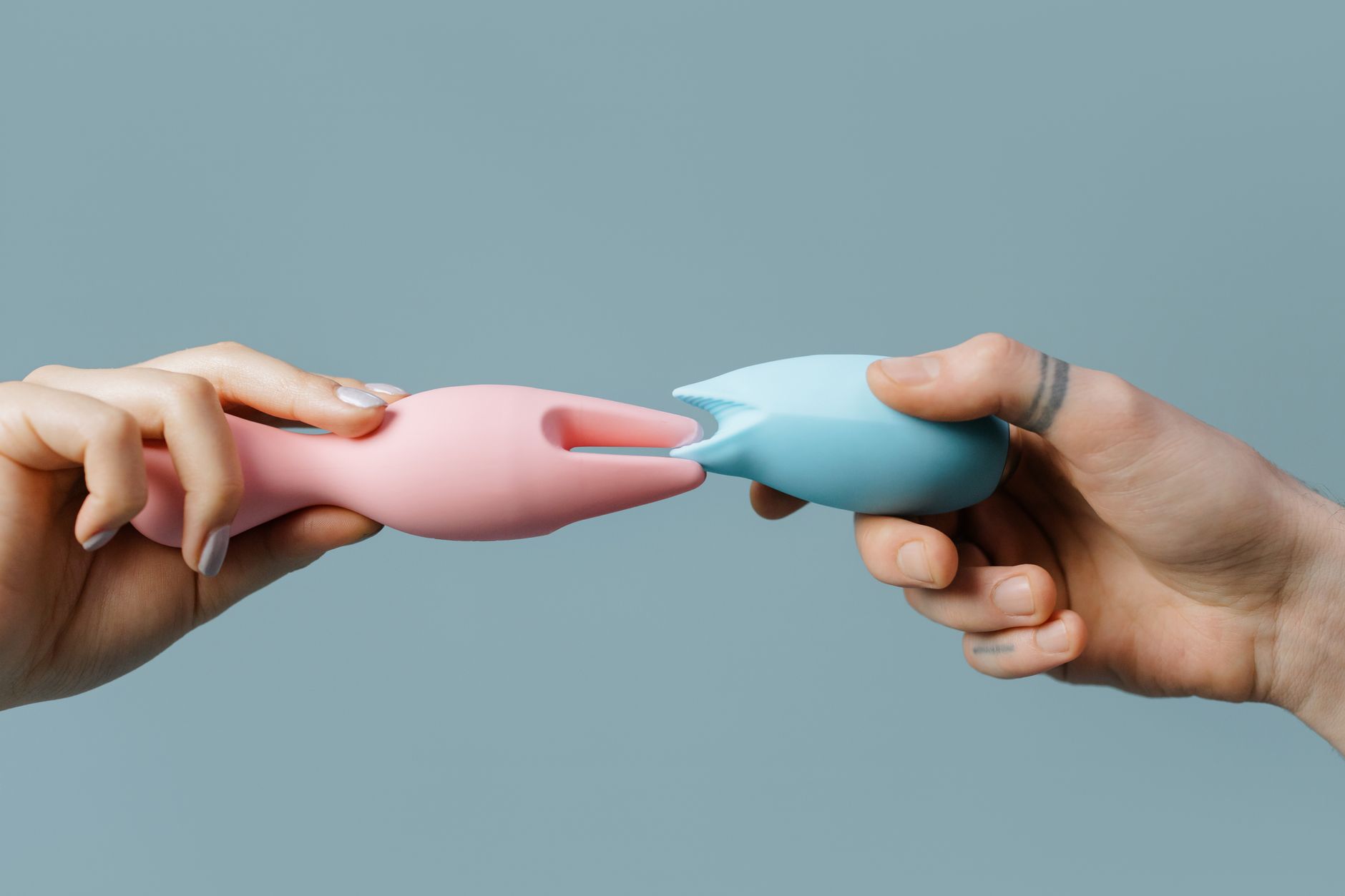
Let's talk about the elephant in the room
Pregnancy and sex is awkward to discuss, which is exactly why most people don't. You're told it's safe. You're also told your partner might feel weird about it. Then your own body hijacks the conversation by either killing your libido entirely or ramping it up to levels that feel alien. Most people get zero guidance on what to expect or how to actually navigate pleasure when your entire physical and emotional landscape is shifting week by week.
Honestly though. Your sexuality doesn't pause for nine months. It evolves. And understanding that evolution is the difference between frustration and genuine pleasure during pregnancy.
The hormonal reality of pregnancy arousal
Your estrogen and progesterone are flooding your system. Progesterone tends to flatten libido in the first trimester (and sometimes throughout). But estrogen increases blood flow to the pelvic region, which can make nerve endings more sensitive. So you could simultaneously feel less interested in sex and more responsive to physical stimulation. Both are completely normal. Both can exist at the same time.
Many people find that the second trimester brings a surge in desire. This is the "pregnancy horniness" phase. It's not a myth. Increased blood volume, heightened pelvic sensitivity, and the psychological shift that comes with accepting the pregnancy all contribute. For some people, pleasure becomes more intense during these months than it's ever been.
For others, it never arrives. That's equally valid.
The point: your arousal during pregnancy is not a reflection of how much you want your partner or whether you're excited about the baby. It's your endocrine system running a different program.
Why a lemon clitoral vibrator works differently now
Your vulva is swollen. Blood volume down there has increased by up to 50 percent. The tissue is plumper, more sensitive, and sometimes more delicate. Direct friction that felt perfect before pregnancy might feel too intense or even uncomfortable now. This is where a lemon vibrator becomes genuinely useful.
The Lem's suction-based stimulation (rather than vibration alone) works particularly well during pregnancy because it distributes sensation across a broader area without the same mechanical pressure on thinned or overly sensitive tissue. You're getting deep clitoral stimulation without the risk of irritation.
The patterns are also gentler to experiment with. Start at the lowest setting. Your sensitivity has changed. The intensity that used to feel right might now feel jarring.
Physical adjustments for pregnancy pleasure
A few practical shifts that make a real difference.
Position matters more now. Lying on your back past the first trimester can restrict blood flow. Side-lying is safer and often more comfortable. If you're using a lemon vibrator alone, this is actually easier than partnered sex because you control the angle and can adjust for comfort instantly.
Lubrication is your friend, even more than usual. Pregnancy swelling might make you assume you don't need it. You do. Extra lubrication prevents irritation and makes the entire experience feel smoother. Use water-based only if your toy is silicone.
Longer warm-up time pays off. Arousal might take longer to build, even in the second trimester when desire is higher. Budget extra time. The journey is often more satisfying than rushing to a specific outcome.
Pace yourself. Pregnancy orgasms can trigger Braxton-Hicks contractions. They're usually harmless, but they can feel alarming if you're not expecting them. If contractions intensify or continue after sex, talk to your provider. Otherwise, it's just your uterus practicing.
The emotional layer nobody mentions
Your body is doing something extraordinary. It's also becoming increasingly unfamiliar. You might feel less attractive, more vulnerable, or weirdly disconnected from sensation. Pleasure can feel impossible when your mind is somewhere else entirely.
If you have a partner, this is worth naming. "I'm interested in pleasure, but my body feels different and my brain is anxious" is a complete and honest sentence. A good partner hears that as useful information, not rejection.
Solitary pleasure during pregnancy is also completely legitimate. Some people find that going solo removes the performance pressure and lets them reconnect with their own sensation without the complexity of a partner's expectations layered on top.
Pregnancy is not a pause on your sexuality. It's a recalibration. Some people find their pleasure deepens. Others need to rebuild their relationship with desire from scratch. Both are okay.
When to check in with your provider
Pleasure and orgasm are safe throughout pregnancy for most people. But some situations warrant a conversation with your OB or midwife.
If you have a history of preterm labor, ask before engaging in sexual activity. If you're at risk for placental abruption or have other complications, your provider might recommend caution. If bleeding appears after sex, mention it at your next appointment.
Most of the time, you'll get the green light. But it's worth asking rather than assuming.
Rebuilding connection with your partner
If you have a partner, pregnancy is often the moment when sexual dynamics need renegotiation. Maybe you want less frequent partnered sex but more solo exploration. Maybe you want touch without penetration. Maybe you want nothing at all for a few months, and that's the boundary.
The mistake most couples make is waiting until resentment builds. Better to say it early: "This is what I need right now. It might change next month." That honesty is unglamorous but genuinely protective of the relationship.
A lemon vibrator can actually ease some of the awkwardness here. It gives both of you a shared focal point. Your partner can learn your new sensitivity together with you. Pleasure becomes collaborative research rather than a performance that's either happening or failing.
The postpartum transition
Your body will change again after birth. Tissue that swelled will recede. Hormones will drop. If you're breastfeeding, estrogen stays suppressed (which can kill libido, ironically, right when you're sleep-deprived and touched-out). If you're not, arousal usually returns within weeks.
Many people find their connection to pleasure is different postpartum than it was pre-pregnancy. Not worse, necessarily. Just different. You might need longer warm-up. You might discover new sensations that didn't exist before. You might need to rebuild trust in your body after what it's just done.
That's why staying curious about pleasure during pregnancy matters. You're not just surviving nine months. You're learning how your body talks to you right now. That knowledge doesn't disappear after birth. It becomes the foundation for whatever pleasure looks like next.
FAQs: Pregnancy, pleasure, and the lemon vibrator
Is it safe to use a lemon vibrator while pregnant?
For most pregnancies, yes. Clitoral stimulation and orgasm don't harm the baby. The suction-based design of a lemon vibrator is actually gentler than many other toys because it doesn't rely on intense vibration. That said, every pregnancy is different. If you have placental complications, a history of preterm labor, or any concerning symptoms, ask your provider before using any toy. They know your specific situation.
Will orgasms trigger labor or harm the baby?
Orgasms cause uterine contractions. Those contractions are not the same as labor contractions. They're usually harmless and actually become less intense as pregnancy progresses. If you're in your third trimester and concerned about triggering early labor, talk to your provider. For most people, pleasure remains safe right up until labor begins.
Why does my sensitivity feel completely different during pregnancy?
Your entire pelvic region has increased blood flow. Tissue is swollen. Nerve endings are more reactive. On top of that, your brain might be somewhere else entirely. Anxiety, nesting instincts, or just the strangeness of your changing body can make sensation feel foreign. This usually settles postpartum, but during pregnancy it's genuinely normal to feel like you're in an unfamiliar body.
Can I use a lemon vibrator if I'm having spotting or bleeding?
Lightning bleeding or spotting during pregnancy is common and usually nothing to worry about. But if you're actively bleeding or spotting, skip internal stimulation and mention it to your provider. External clitoral stimulation is lower-risk, but it's still worth checking in. Better safe.
What if I have zero interest in sex during pregnancy and my partner is frustrated?
That's a conversation problem, not a pleasure problem. You're not broken. You're pregnant. Your body is managing enormous physical and emotional changes. Your partner's frustration is real, but it's not something you need to fix with your body. What actually helps: clarity about what you do want (if anything), what timeline makes sense, and what compromises feel good to both of you. Sometimes that's solo exploration. Sometimes it's non-sexual touch. Sometimes it's honestly saying "ask me again next month."
When is it safe to use toys again postpartum?
Talk to your provider. Usually, if you've had a vaginal birth without tearing, internal toys are generally safe after your six-week checkup (assuming bleeding has stopped). If you've had a C-section or significant tearing, your timeline might be different. Clitoral toys with no internal insertion are usually safe sooner. But ask your specific provider about your specific situation.
Moving forward
Pregnancy transforms pleasure. Sometimes it enhances it. Sometimes it suspends it temporarily. Your job is not to white-knuckle your way back to pre-pregnancy sexuality. Your job is to stay curious about what your body is capable of right now, to communicate honestly with your partner if you have one, and to give yourself permission to need something different than you needed six months ago.
A lemon vibrator is just a tool. What matters is that you have permission to explore sensation on your own terms, during one of the most body-focused seasons of your life. That's worth protecting.
If you're navigating pregnancy pleasure and feeling lost, that's exactly when good information and clear communication matter most. Get both.