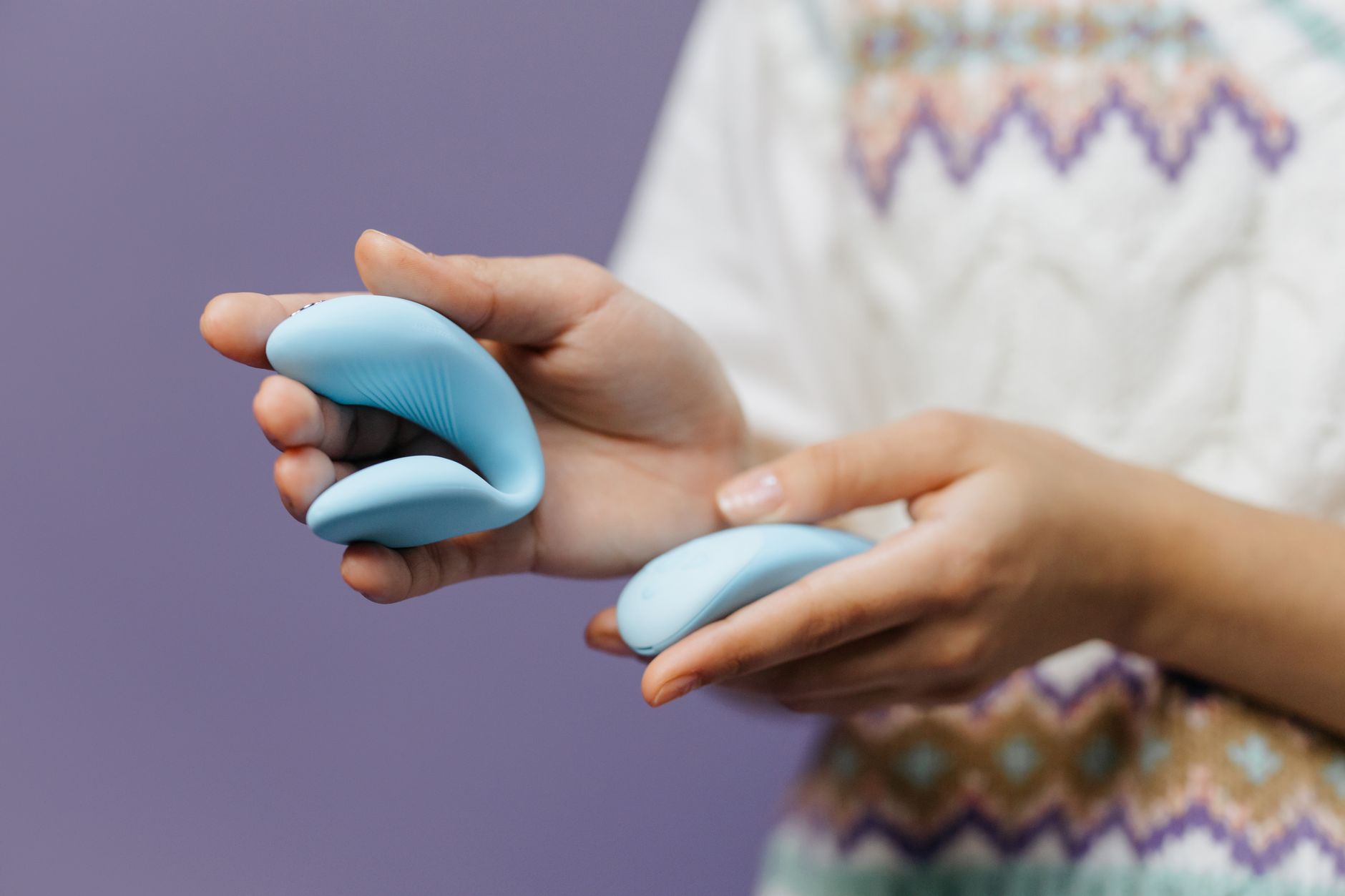
Let's talk about the timing question
Here's the thing: when a partner suggests toys after five, ten, or twenty years together, it lands differently than discovering them early on. It can feel like a referendum on what's not working, or worse, a sign that one of you has outgrown the other. That narrative is almost never true, but the emotional weight of it can make sex feel fraught instead of fun.
The introduction of a lemon clitoral vibrator in an established relationship doesn't mean your previous intimacy was insufficient. It usually means one or both of you are ready to expand what's possible, and that's actually a sign the relationship has enough safety to evolve.
Why partners bring up toys later (and it matters what they mean)
The reasons break into three camps, and knowing which one applies is half the solution.
The curiosity camp. One of you has gotten curious about pleasure exploration and wants to share it. This is the easiest starting point because it's not about fixing anything. It's about adding.
The desire-mismatch camp. Libidos have drifted apart over the years, and toys feel like a bridge. This one requires more conversation, but it's workable. A lemon vibrator can actually help both partners feel less pressure and more connected.
The unspoken-need camp. One partner has needed something specific for a while—stronger stimulation, consistency, a specific pattern—and finally named it. This takes some ego-softening, but it's the most honest foundation for intimacy.
The conversation before the toy matters more than the toy itself. Knowing which camp you're in shapes how you use something like the Helo Nancy Lems clitoral vibrator.
The conversation you need to have (before the toy arrives)
If toys weren't part of your early sexual relationship, you're introducing a new dynamic. That's not inherently bad, but it's worth acknowledging.
Ask directly: "What made you want to explore this now?" Listen without defending or explaining. The answer might be simple ("I read something interesting") or layered ("I think we've gotten comfortable in a way that's nice, but I want us to keep discovering"). Both are valid. Both deserve a real response.
Then name your own feelings, even if they're complicated. "I'm curious and also a little nervous" is honest. "I feel like maybe I haven't been enough" is the scary sentence that often sits underneath, and saying it out loud usually deflates its power.
Set expectations together: Will this be something you use together or separately? Will you talk about it beforehand or let it unfold in the moment? Is this about solo exploration, partnered play, or both?
This conversation doesn't need to be long, but it needs to happen before clothes come off.
How to actually integrate the lemon vibrator into partnered sex
Start small, literally and figuratively. A lemon sexual toy designed for clitoral stimulation is not a replacement for your body or touch. Frame it as an addition to what you already do.
First time together. Don't make it the centerpiece. Warm up the way you normally do. Kiss, touch, build arousal through familiar patterns. When you're already turned on, introduce the vibrator as part of what's happening, not the main event. Some couples find it easiest to start with one partner using it on themselves while the other is present, rather than immediately handing control over.
Let the partner with the vulva drive this part. If you're the person with the clitoris, you get to decide when and how the lemon clitoral vibrator enters the picture. This isn't about being controlling. It's about autonomy. If your partner is driving the introduction, ask for that control back. "I want to try this when I feel ready and on my terms" is a complete sentence.
Communicate in real time. "That feels good" is information. So is "I need a break" or "I want more pressure" or even "This isn't working for me right now and that's okay." People who have sex with the same partner for years sometimes forget that pleasure isn't static. What felt incredible last week might feel like too much today, and a lemon vibrator doesn't change that.
The emotional side: what often comes up
When toys enter an established relationship, sometimes old patterns surface.
If one partner feels like they're failing, the vibrator can feel like proof. If the other partner has been waiting years for permission to want more, there might be resentment underneath. If you've built your sexual identity around being "enough" for each other, a toy can feel like it contradicts that story.
None of that is about the toy. It's about the relationship story you've both been holding.
The vibrator becomes useful if it helps you revise that story together. From "we have great sex" to "we have the kind of relationship where we can explore and evolve." From "I should be enough" to "we both deserve pleasure in whatever form helps us feel it." From "toys mean something is wrong" to "toys mean something is being added."
Introducing a vibrator late in a relationship isn't a reset. It's an upgrade to the intimacy you already have.
This reframe is not just semantics. It changes everything about how you approach the experience.
Practical setup for better outcomes
A few logistics choices make the difference between awkward and actually good.
Privacy and timing matter. If you've never used a lemon adult toy together, don't try it right before bed when you're exhausted or when kids might interrupt. Pick a time when you both have energy and space to focus.
Lubricant is essential. Even if you don't usually need it, use it here. It reduces friction, makes everything feel smoother, and honestly, it signals that this is intentional and special, not an accident.
Keep the pressure low at first. The Helo Nancy Lems vibrators have multiple intensity levels for a reason. Start at pattern 1 or 2. Your body will tell you if it wants more. The goal isn't maximum stimulation. It's finding what feels good to you specifically.
Don't make it the only way you touch. Use the vibrator as one part of sex, not the whole experience. Touch each other without it, too. The contrast actually makes everything feel more intense, not less.
When it doesn't feel good (and that's okay)
Sometimes a partner introduces toys with the best intentions, and it still doesn't land for the other person. Maybe the timing feels wrong. Maybe the sensation isn't what you expected. Maybe the emotional weight of the introduction is bigger than the pleasure side.
That's not failure. That's data.
If a lemon clitoral vibrator doesn't work for you, say so clearly. "I appreciate you wanting to explore this, and it's not for me right now" is honest. You don't owe yourself or your partner forced enthusiasm about a pleasure tool that doesn't actually feel pleasurable.
Some couples circle back to toys later. Some find other ways to evolve intimacy. What matters is that you're not using the vibrator out of obligation or to prove something to your partner. Pleasure that comes from obligation isn't pleasure.
The relationship shift underneath all this
When toys arrive late, what's often really happening is that one or both partners are ready for a different kind of sexual relationship. Maybe one person has been thinking about their own pleasure more intentionally. Maybe you're both noticing that the familiar patterns have gotten a bit flat. Maybe you're both ready to act like the version of yourselves that knows more about what you want.
The vibrator is just a tool. The real shift is the permission underneath it.
If you can name that permission explicitly, that's when toys stop feeling like repairs for a broken thing and start feeling like invitations to something new.
The Helo Nancy Lems lemon sexual toys are designed to be straightforward and intuitive. They don't require a learning curve. That simplicity means you can focus on what actually matters: the conversation, the connection, the willingness to evolve together.
That's what changes sex in a long relationship. Not the toy. The fact that you're both still curious enough to try.
People also ask
Does introducing a vibrator mean my partner isn't satisfied with me anymore?
Not usually, no. In established relationships, toys often signal that one or both partners are ready to expand pleasure, not replace it. It's like the difference between getting bored with your favorite restaurant and wanting to try somewhere new. The favorite restaurant was always good. You just want options. If your partner is using a lemon clitoral vibrator, it likely means they're interested in deepening sensation, not signaling that your body or touch has become insufficient. That said, if you're worried about what it means for your relationship, that worry deserves its own conversation with your partner. Sometimes the tool becomes a container for older concerns that need addressing separately.
Is it okay to use a lemon vibrator solo if my partner doesn't know about it?
Yes, absolutely. Solo pleasure is different from partnered pleasure, and you don't owe your partner a report on every sensation you explore alone. That said, if your partner has specifically suggested using a vibrator together and you're interested in exploring it solo first to understand what you like, telling them that is kind. "I'd like to get comfortable with this on my own before we use it together" is information that actually helps. It's not the same as hiding it. The distinction matters.
What if my partner pushes for toy use and I'm genuinely not interested?
Your pleasure is not something you should negotiate away. If a lemon vibrator doesn't appeal to you, you're allowed to say no without guilt or explanation. Where it gets trickier is if your partner's desire for toy exploration feels like pressure, or if you're saying no because you think you should. If you're genuinely uninterested, that's fine. If you're interested but anxious, it's worth exploring why. Sometimes anxiety settles once you understand what the toy actually is. Sometimes it doesn't, and that's fine too. The goal isn't to want what your partner wants. It's to stay honest about what you actually want.
How do I bring up toys if my partner never has mentioned them?
Do it outside the bedroom, preferably outside of a sexual moment. "I've been curious about exploring pleasure in new ways. Would you be open to trying something together?" is direct without being demanding. Be prepared for resistance, curiosity, or confusion. Listen to what comes back. If your partner is resistant, don't push. If they're curious, you can offer to start slow or explore separately first. The conversation matters more than convincing them. If they're confused, that might just mean toys weren't in their world before and they need time to process that idea.
Can a vibrator help if we're in a bedroom rut?
It can be part of the solution, but usually not the whole thing. A bedroom rut often signals that something underneath needs attention: emotional distance, unspoken resentments, loss of novelty, or just the wear of years together. A lemon sexual toy might help you reconnect to pleasure, which can help. But if you're using it to avoid the real conversation, it won't land. The vibrator works best when it's one piece of a larger commitment to evolving together.
Should I try a lemon vibrator alone before using it with my partner?
Yes. Understanding what feels good to your own body gives you information you can't get from a partner's guess. Solo exploration also removes the performance pressure that sometimes comes with partnered sex. You get to be selfish with the sensation, figure out what intensity you like, what patterns feel good. Then when you use it together, you already know what you're after. That knowledge actually makes partnered sex better because you're not discovering the tool at the same time you're managing the emotional weight of using it together.
Final thought
Toys arriving late in a relationship can feel like a plot twist in a story you thought you knew the ending to. But most of the time, they're just chapters you didn't expect. The intimacy you've built together doesn't disappear because you're adding something new to it. If anything, the fact that you're both willing to keep exploring says something good about what you have.