
Let's name the actual problem
You want to introduce toys into your sex life. Your partner sees them as a threat, a sign you're not satisfied, or proof that they're not enough. Neither of you is wrong. But you're also both stuck in a script that assumes toys are about replacing someone instead of expanding what's possible together.
Here's the thing: that script is mostly cultural baggage, not truth. And the good news is that the conversation you need to have isn't actually that hard once you separate the real concern from the assumption hiding underneath it.
Why your partner might actually be resisting
Listen, when someone says "I don't want you using a vibrator," what they're often really saying is one of three things.
"I'm worried you'll need this more than you need me." This one's about scarcity. In their mind, pleasure is a fixed pie. If a lemon clitoral vibrator gives you an orgasm, that somehow takes away from the orgasms your partner can give you. It feels like competition. It's not rational, but it's human.
"I'm not sure what my role is anymore." Toys can feel destabilizing because they introduce something into the bedroom that your partner can't directly control or predict. If you've been the one steering sex for years, suddenly sharing that space with a third thing (the vibrator) feels like losing ground.
"This means something about us that I don't want to believe." Sometimes the resistance is actually about grief. If things have been static or distant, a toy feels like it's naming the problem instead of letting you both pretend it's fine. It's easier to say "I don't want you using that" than to say "I'm scared we're drifting."
None of these are reasons to drop the conversation. They're reasons to have a better one.
The conversation you actually need to have
Timing matters. You're not doing this mid-fight, not right before sex, not when they're stressed about work. You're picking a calm moment when you both have space to actually listen.
Start with curiosity, not persuasion. "I've been thinking about something, and I want to understand how you feel about it before I decide anything. Can we talk?" Notice you're not asking permission. You're inviting them into your thinking.
Then name what you know: "I think maybe the idea of me using a vibrator makes you feel like I'm not satisfied with you, or like you're being replaced somehow. Is that part of it?" You're giving them permission to tell you the actual worry instead of the surface objection.
Listen. Actually listen. Don't jump to "but actually" or start building your rebuttal. Let them say the thing.
Then here's the move that changes it: "That's not what this is for me. Here's what it actually is." And you get specific. Maybe it's "I want to understand my own body better." Maybe it's "I know orgasms take me longer now, and I want to feel more during sex with you, not less." Maybe it's "I think this could actually be fun for both of us."
The lemon vibrator, specifically, is useful here because it's not intimidating. It's not a giant wand or an elaborate toy. It's small, design-forward, straightforward. It looks like a nice thing someone chose because they care about quality, not because they were desperate. That matters to how it lands.
The part where you actually build agreement
Here's what you don't do: you don't promise "I'll only use this when you're not around." That just makes it shameful and secret. Shame doesn't help anything.
Instead, you invite them in. "I'd like to try this. And I'd actually love to do it together first so you can see it's not scary." That's the move. Not hiding it. Including them.
That could mean using a lemon clitoral vibrator during partnered sex, during foreplay, while your partner watches. It could mean they're the one holding it while you guide them. It could mean you use it and they use you, or vice versa. The point is, you're not sneaking. You're inviting.
For partners who are worried about being replaced, watching you respond to stimulation that's not from them often actually helps. It removes the magic. It makes it visible and real instead of threatening and abstract. They see your body, your pleasure, your reactions. They realize the lemon vibrator isn't the story. You are.
The boundaries that actually protect connection
Let's talk about what boundaries look like when you're on different pages.
You get to have a private sexuality. Your partner doesn't get to have surveillance over when you use toys alone. That's not partnership. That's control. Full stop. If your partner is saying "you can't ever use this," you have a different conversation, and it might be with a therapist.
But if they're saying "I'm not comfortable with this yet," that's different. That's a real boundary born from real fear. And you can honor that while still honoring yourself.
Maybe the agreement is: "I'd like to explore this with you first. Once you've seen it and felt comfortable, then I might use it alone sometimes." That's reasonable. That builds trust instead of eroding it.
Maybe the boundary is: "I'm not ready to use this during partnered sex yet, but I'd like to try it on my own." Also reasonable. You're not demanding immediate acceptance. You're asking for permission to explore.
What's not acceptable is your partner controlling your solo sexuality or your pleasure. If that's where you are, that's the actual problem, and a vibrator isn't going to solve it.
Why the lemon vibrator specifically works here
There are a lot of clitoral vibrators out there. The lemon sucker design is different because it doesn't look medical or aggressive. It looks like a beautiful object someone wanted. That distinction matters when you're trying to shift how your partner sees toys.
It's also genuinely effective, which means you'll get results. Your partner will see that this isn't about replacing them. It's about adding a new dimension to what already works. A lemon clitoral vibrator doesn't do what your partner's mouth or fingers do. It does something else. That's the whole point.
Start at a lower setting. Let your partner see how it feels on your wrist or your arm first. Literally let them experience the vibration so it's not mysterious. Then during sex, when you're already connected and present, introduce it as another layer. Not a replacement. A layer.
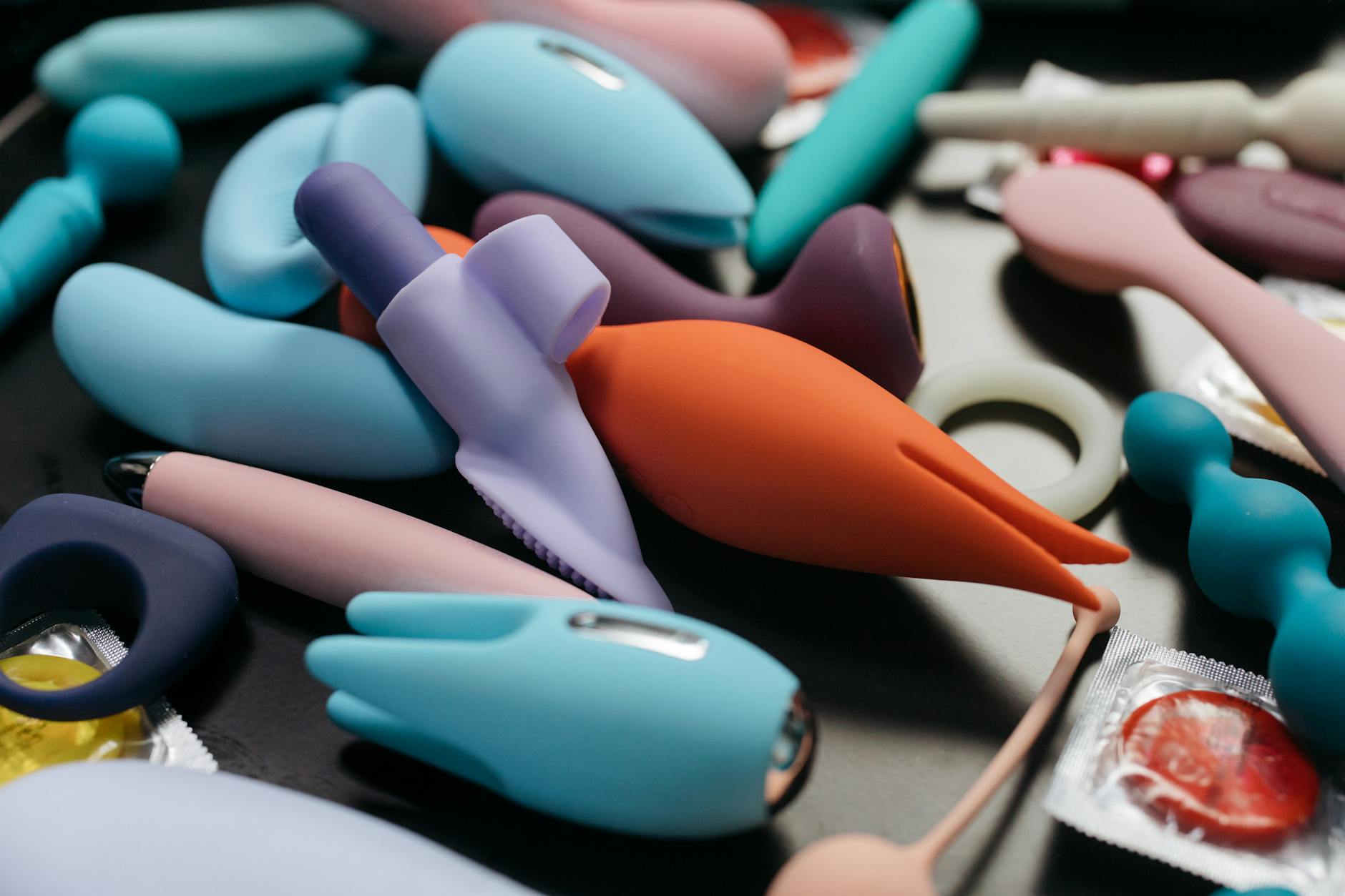
Photo by cottonbro studio on Pexels
The conversation that happens after
Once you've used it together, check in. Not in a clinical way. Just: "What was that like for you?" and actually hear the answer. Your partner might say it felt weird, or hot, or awkward. All of those are useful data.
If it felt awkward, ask what specifically. Was it the vibration? The loss of control? The feeling that sex suddenly had a "thing" in it? These are solvable problems. You can talk about rhythm, you can talk about when it comes in, you can talk about exploring it slower.
Most partners, when they actually experience a lemon vibrator in action and see how much pleasure it gives their partner, shift. Not immediately always. But they shift. Because it stops being abstract and threatening and becomes tangible and generous. You're letting them give you more pleasure. That's not threatening. That's an invitation.
If your partner remains resistant after you've had the conversation, invited them in, and they've experienced it, that tells you something about what's actually going on. Sometimes it's not about the toy. Sometimes it's about control, or fear, or a deeper rupture in the relationship. That's when talking to a couples therapist makes sense.
But most of the time, the resistance loosens once you've done the work of making it real instead of scary.
What happens next
You're not trying to convince your partner to love toys. You're trying to shift the story from "vibrator means you're not enough" to "we get to explore pleasure together." Those are completely different conversations.
Start small. Use a lemon clitoral vibrator during sex. Pay attention to what your partner notices. Check in. Adjust. Repeat. Over time, the thing that felt like a threat becomes just another part of how you both experience pleasure together.
And honestly? Couples who navigate this well often report that the conversation itself brought them closer. Because it required you both to be honest about fear, to listen, and to choose each other anyway. That's intimacy. The lemon vibrator is just the beginning.
People also ask
How do I bring up using a lemon vibrator without my partner feeling insulted?
Frame it as curiosity, not criticism. "I've been reading about how different types of stimulation can deepen sensation, and I'm curious to explore it" is different from "I'm not satisfied with what we have." The first invites them into an exploration. The second sounds like blame. Also, timing matters. Don't bring it up during sex or conflict.
What if my partner says no and won't budge?
Then you have a bigger conversation about autonomy and control in your relationship. You get to have a private sexuality, even in a partnership. If your partner is demanding total control over your pleasure, that's not a toy problem. That's a relationship problem worth examining with a therapist.
Can using a lemon clitoral vibrator together actually bring us closer?
Yes. When both partners are curious instead of defensive, shared exploration of pleasure can absolutely deepen intimacy. You're vulnerable, you're honest, you're creating something new together. That builds connection. But only if both people actually want to be there.
How do I know if my partner is resisting because they're insecure or because they genuinely don't want toys?
Ask. "I notice you seem uncomfortable with this. Can you help me understand what's really going on?" Sometimes it's insecurity. Sometimes it's a genuine preference. Sometimes it's both. Either way, you need to know before you can move forward.
What if I want to use a lemon vibrator alone, and my partner is uncomfortable with that?
Your solo sexuality is yours. You're allowed to explore your own body privately. But if your partner has drawn a hard line, that's a conversation about trust and autonomy that might need a mediator. You shouldn't have to hide, but you also shouldn't steamroll someone's genuine fear without understanding it first.
How long does it usually take for a partner to accept vibrators?
It varies wildly. Some partners come around after one conversation. Others need to see it in action first. Some need months. The timeline isn't the point. What matters is whether your partner is willing to move toward you at all. If they're curious or afraid but open, that's workable. If they're defensive and controlling, that's different.
If you're feeling stuck in the conversation or noticing deeper patterns of control or shame in your relationship, that's worth exploring with a professional. Reach out if you'd like support navigating these conversations with more nuance.