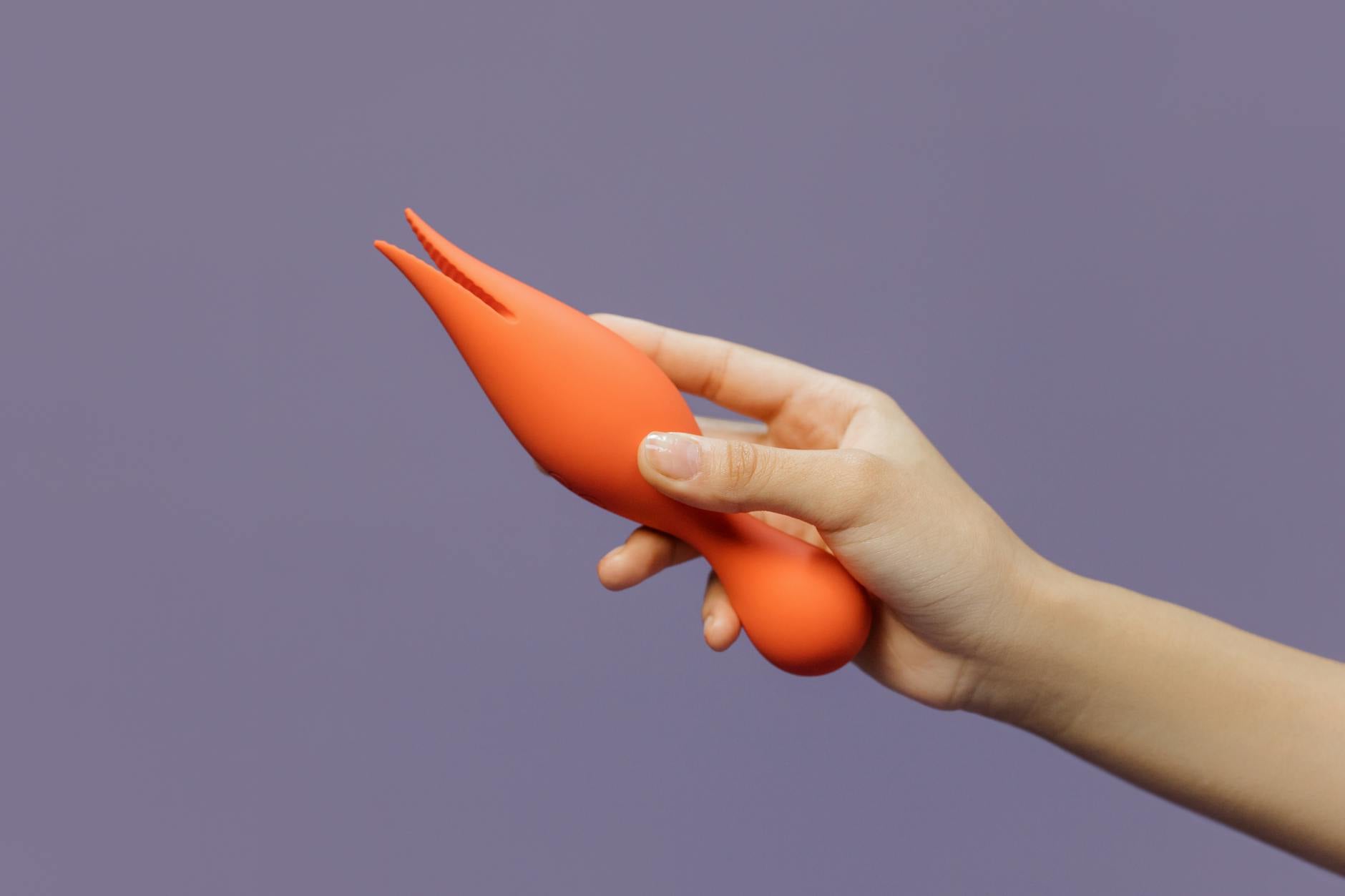
Here's the thing about bringing toys into an established partnership
It's not actually about the toy. That's the part most guides skip over. The lemon vibrator, the lem, any clitoral vibrator. These are tools. What matters is the conversation, the timing, and whether your partner understands that asking for this changes nothing about your attraction to them.
I've worked with hundreds of couples navigating this exact moment. The ones who succeed aren't the ones with the "perfect" introduction. They're the ones who separate three threads: desire, reassurance, and logistics. Let me walk you through each.
Why the conversation needs to happen before the toy appears
Not three seconds before. Not mid-foreplay. Before.
Here's what I mean: your partner has probably absorbed the same cultural nonsense you have. That introducing a toy means their partner isn't satisfied. That wanting to explore new sensations signals a problem with the relationship. That pleasure is supposed to happen a certain way, and deviation from that way suggests something's broken.
None of that is true. But it's lived in your partner's brain for decades, same as it lived in yours.
So the conversation isn't really about the lemon vibrator. It's about giving your partner permission to believe three things: (1) This is about exploration, not replacement. (2) I'm not going anywhere. (3) Your comfort matters as much as my curiosity.
That conversation might sound like: "I've been thinking about trying something new, and I wanted to talk to you about it before I brought anything into our bedroom. I'm curious about how a lemon clitoral vibrator would feel, and I'd love to experiment together. How do you feel about that?"
Notice what's in there. The word "together." The acknowledgment that you're asking permission, not announcing a decision. The space for a response.
Notice what's not in there. Apologies. Explanations of what's "wrong" with your current sex life. Pressure. Data dumps.
The reassurance that actually lands
Your partner might say: "Sure, sounds fun." And might also say: "I'm not sure how I feel about that" or even "Honestly, that makes me nervous."
Both are real responses. Both need handling differently.
If your partner is enthusiastic, great. Move to logistics.
If your partner is hesitant, the worst thing you can do is start defending the toy. That makes it defensive territory. Instead, ask what the hesitation is. Often it's one of three things:
"I won't be enough." This one needs direct reframing. "Here's the truth. You're always enough. This isn't about you being replaced or inadequate. It's about my body and what feels good to it right now. Those are separate things."
"I don't know how to use it." Totally fair. "Neither do I, yet. We'll figure it out together. It's not complicated, and there's zero pressure to get it 'right.'" Then actually mean that.
"I'm not sure I want to watch." Listen to that. Some partners love being present during partnered play. Others feel awkward. Some want to participate differently (hands, mouth, proximity, whatever). "Okay. What would feel good to you instead?"
The goal of reassurance isn't to convince your partner they should want this. It's to address the specific fear underneath the hesitation.
Setting up the first time without it feeling like a performance
This is crucial because anxiety kills arousal. And the first time you're using a new toy with a partner is inherently anxiety-creating.
So remove as many variables as you can.
Pick a time when you're both relaxed. Not after a stressful day at work. Not when you're rushing somewhere. Not when you're tired. Pick a time when you could have regular sex and actually want to.
Start with the toy on the table between you. Let your partner look at it. Hold it. Ask questions. "How does it feel? Does it look how you imagined?" The goal is familiarity, not mystery. A lemon vibrator is a very normal object when you're not treating it like contraband.
Low intensity wins. If it's got settings, start at level one or two. You're not trying to have the best orgasm of your life. You're trying to see how it feels in your body while your partner is present, and vice versa.
Your partner doesn't have to participate in the stimulation yet. They could use their hands. Their mouth. They could simply be present and engaged while you explore. This takes pressure off both of you to do it "right." Your partner can be involved without operating the toy.
Narrate what's happening. Not clinical narration like you're writing a case study. But "That feels good" or "Bit more to the left" or "This intensity is perfect." Your partner has zero context for what clitoral suction feels like or how it compares to other sensations. When you describe what you're experiencing, it demystifies the whole thing.
When your partner wants to take the lead
Eventually, this will probably happen. Your partner wants to hold the lemon vibrator. To explore how it works. To be part of the sensation.
This is actually the moment most couples fumble, because they don't know what communication looks like in real time.
Your partner is holding a lemon clitoral vibrator for the first time. They're probably nervous about pressure, angle, speed, duration. All of that can be solved with one rule: you keep talking.
"A bit softer." "That spot right there." "Slower." "More pressure at the top."
This isn't criticism. It's collaboration. When your partner understands that feedback is normal and welcome, they relax. They stop trying to guess. They stop second-guessing themselves. They start actually exploring what feels good to you.
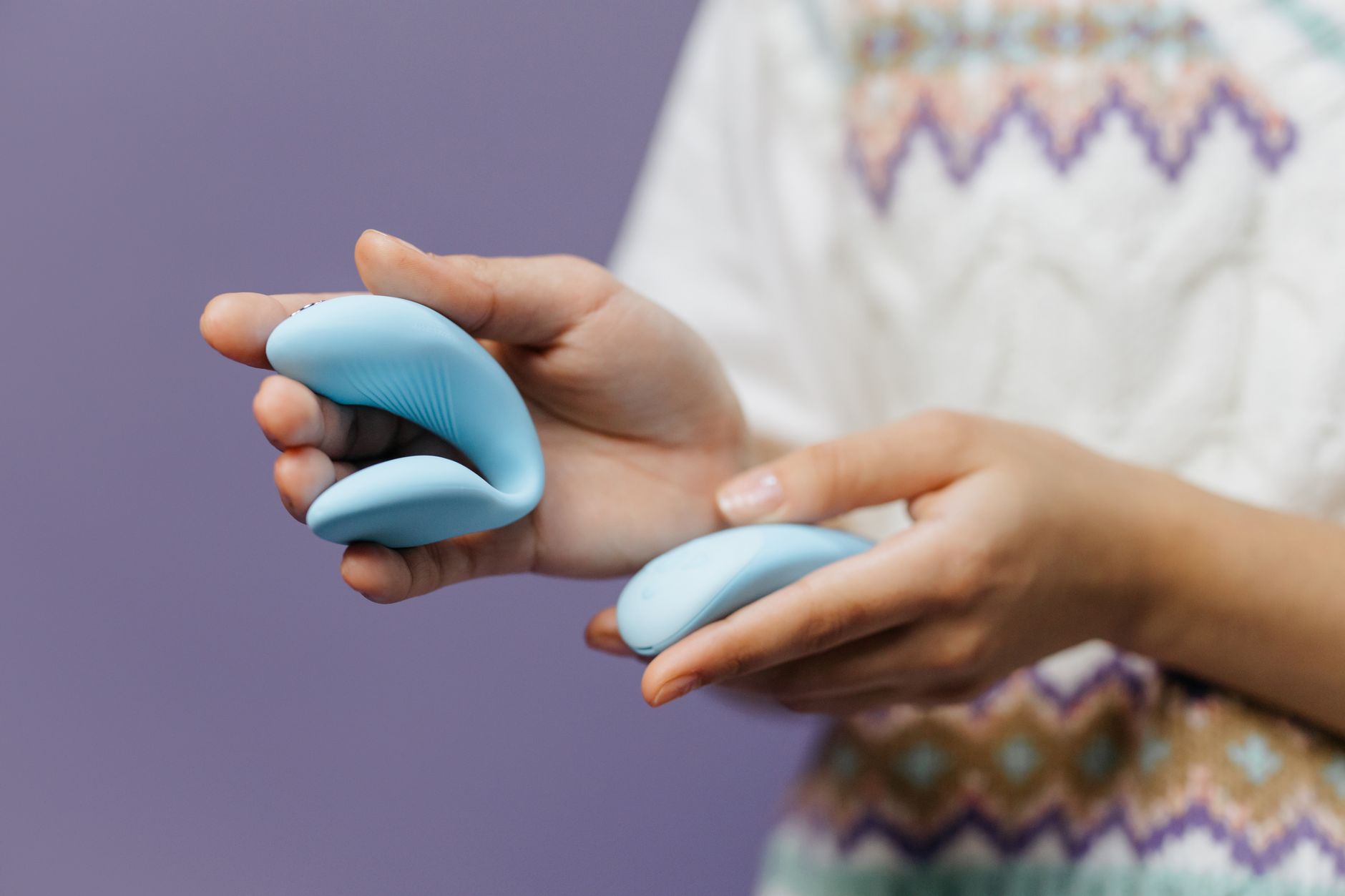
Photo by cottonbro studio on Pexels
The pleasure surprise that actually happens
Here's what I see repeatedly with couples who get past the initial introduction: the toy becomes a vehicle for discovering what actually works for both people.
Your partner realizes they enjoy watching you respond to sensations. You realize you were holding back during regular sex. A lemon vibrator creates space for both people to be more honest about what feels good. And honesty is where intimacy lives.
For some couples, it becomes a regular part of sex. For others, it's occasional. Some people realize they prefer exploring it solo, and their partner gets that. The specifics don't matter. What matters is that the conversation and permission are already established.
Common friction points and how to move through them
"It's too intense for me to watch." Some partners find it visually overstimulating at first. You don't need constant eye contact or dramatic displays of pleasure to make someone feel included. They could be kissing your neck. Running their hands over you. That counts.
"I think I'm doing it wrong because you're not orgasming yet." Suction toys can take time, especially if your partner's never used them before. Adjust your own expectations. This isn't a race. "I'm just enjoying this. Keep going" is a complete sentence.
"I miss it when it was just us." This is real. Add something new doesn't mean abandon what worked before. A lemon vibrator is one tool in your kit. Regular sex, hands, oral, whatever you were doing. It's all still available.
"I feel awkward afterward." Post-sex vulnerability is normal. Some couples find it helps to have a normal conversation immediately after. "That was fun. I liked how you..." Making it part of the narrative, not something you pretend didn't happen, helps.
If your partner wants to try it on themselves
This is its own arc, and it's beautiful. Some partners find that exploring a lemon clitoral vibrator by themselves first gives them agency and knowledge they didn't have watching you. They understand intensity, angles, settings. They come back to partnered sex with their own expertise.
If this happens, let it. Don't turn it into "hey, want to do that together?" immediately. Let them have their own relationship with the toy. When you integrate it back into partnership, both of you are bringing real experience, not curiosity.
The conversation that prevents most problems
After the first time, at a moment when you're not in bed: "How was that for you?"
Listen to the actual answer, not the answer you want to hear.
"It was fun but kind of awkward" is useful data. "I felt uncomfortable" is useful data. "I loved it, can we do that again?" is also useful data.
Your partner's honesty now determines whether this becomes a regular part of your sex life or a one-off experiment. Both are valid. The goal is being on the same page about which one it is.
FAQ: Couples introducing a lemon vibrator together
How do I know if my partner will be okay with this?
You ask them. There's no way to predict it. Some partners you'd expect to be thrilled are hesitant. Others surprise you. The quality of your relationship matters more than their predicted reaction. Partners who trust each other and communicate well tend to navigate this smoothly, regardless of initial feelings.
What if my partner says no?
Then it's no. Not "no for now." Not "let me convince you." Respect that boundary. You can revisit in the future if circumstances shift, but pushing creates resentment. If partnered exploration with toys is important to you and your partner consistently declines, that's real relationship information worth thinking about separately.
Can we use a lemon vibrator during regular penetration?
Yes. Many people add clitoral stimulation during partnered sex for the first time with a toy. Start with lower intensity and make sure communication is clear. Your partner needs to know what you're doing before it's already happening.
What if I orgasm quickly with the lemon vibrator and my partner feels rejected?
This is worth naming directly. "That felt amazing, and my body responded fast. That says nothing about you or us. Can we keep going?" Or shift gears. The toy doesn't mean the end of partnered sex. It can be the beginning, the middle, or integrated however you both want.
Should we have a specific safe word for toy play?
A safe word is useful if things escalate into intensity or dynamics that need a "stop everything" signal. For basic exploration with toys, clear verbal communication usually works. "That's too much" or "Let's take a break" should be heard and honored immediately. You don't need formal structure for that.
How often should we use the lemon vibrator together?
Whatever frequency feels good to both people. Some couples integrate it weekly. Others use it occasionally. Some find that after the initial novelty, they prefer their original rhythm. There's no right answer. The only wrong answer is doing it at a frequency that leaves one partner feeling pressured or neglected.
What comes next
Introducing a lemon vibrator into your partnered sex life isn't about the toy becoming a permanent fixture. It's about expanding what's possible between you. Sometimes that means the toy stays. Sometimes it means you learned something about yourselves that changes everything, and you go back to what you were doing before. Both are wins.
The real relationship win is that you had the conversation before it mattered. You created space for honesty. You checked in with each other. You tried something new without shame.
That's the actual intimacy. The toy is just the excuse to practice it.