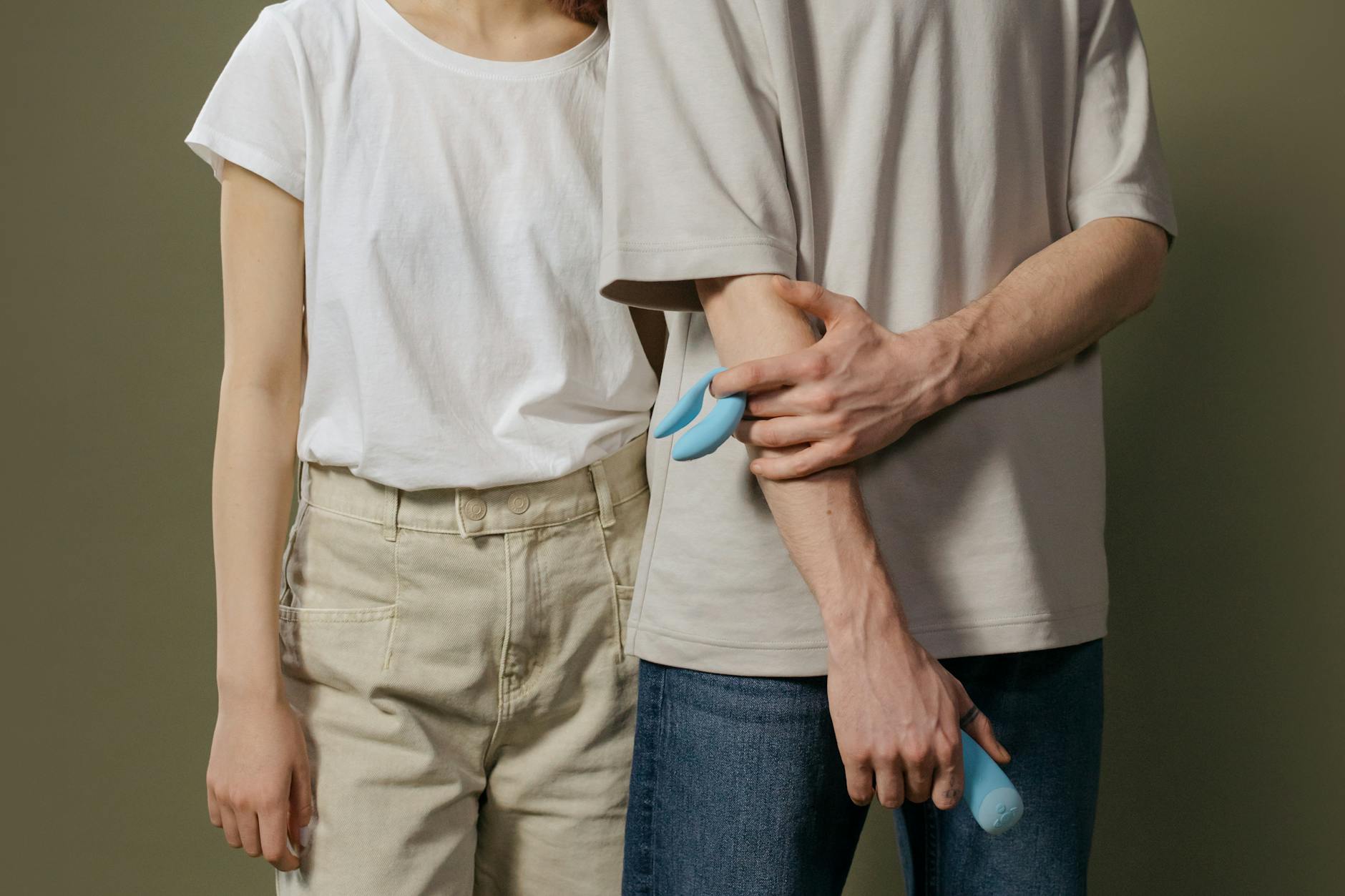
Here's what nobody tells you about orgasm changes
You've used your lemon vibrator the same way for months or years. Then something shifts in your life. A new relationship, a job change, a move, health news, becoming a parent. Suddenly, the orgasm that always worked the same way feels different. Sometimes better. Often just... flatter. And you're wondering if your vibrator is broken, if you've lost sensitivity, or if something's wrong with you.
None of those things are true. What's happening is neurological and relational, not mechanical. Your lemon clitoral vibrator is still doing exactly what it did before. Your body and mind are different.
The brain is actually in charge of pleasure
This is the part that changes everything about how you understand your own orgasms. We talk about vibrators and sensation as if pleasure lives in the body. But pleasure lives in the brain, and the brain filters every single signal from your clitoris based on what's happening around you, what you're thinking about, and how safe you feel.
When you're in a major life transition, your nervous system is running in a slightly elevated state. You're processing change. You're managing uncertainty. That's not a moral failing. That's your body doing exactly what evolution designed it to do. But it means your brain's bandwidth for pleasure gets smaller.
Your lemon clitoral vibrator is sending the same signal. Your clitoris is receiving it the same way. But your brain is receiving the signal through a filter that's slightly thicker than it was before.
What actually shifts during big transitions
Three concrete things change in your pleasure circuitry when you're navigating a major life event.
First, mental attention. Orgasm requires what neuroscientists call "absorption." It's a state where you're fully in your body and not thinking about anything else. During big transitions, your brain is running background processes. Are the kids okay? Is my job secure? Am I making the right choice? These thoughts live quietly in the back of your consciousness, stealing processing power from pleasure. Your lemon vibrator can't compete with your own mind.
Second, nervous system baseline. Your vagus nerve and parasympathetic nervous system are what allow relaxation and arousal. When you're in a state of change, your nervous system runs with a higher baseline activation. You're slightly more alert. That keeps your arousal threshold higher. You need more time to warm up, more intensity to feel sensation, more safety to let go into orgasm.
Third, relationship context. If the life change involves your relationship (a new partner, moving in together, a major conflict and reconciliation, a renegotiation of how you want to be intimate), the neural patterns that pair arousal with emotional safety completely rewire. This is not about attraction. This is about whether your nervous system trusts that the environment is safe for vulnerability. That takes time.
Why this happens with partners, and alone
You'd think orgasms alone with a lemon vibrator wouldn't be affected by relationship changes. But they are, because your nervous system doesn't distinguish between solo and partnered pleasure when it comes to baseline safety. If you're in the early stages of a new relationship or in a period of conflict with a long-term partner, your entire nervous system is slightly more defended. That defense carries into solo time too.
Same logic with other major changes. A new job, a health diagnosis, moving to a new city, a grief event. All of these increase your nervous system's overall vigilance. Your lemon clitoral vibrator doesn't feel less good because you've changed. It feels less good because your nervous system is running in a slightly more protective state.
The timeline of recalibration
How long does it actually take for orgasm quality to return to baseline after a major transition? The answer depends on three things.
First, how much closure you've made with the change itself. If you've grieved the loss, made the decision, committed to the choice, or built new routines, your nervous system starts to recognize the new normal as safe. That usually takes 6 to 12 weeks for a significant change.
Second, how much you're actively rebuilding pleasure. If you're waiting passively for sensation to return, it takes longer. If you're intentionally creating space for arousal, using your lemon vibrator regularly, and building rituals around it, recalibration accelerates to 4 to 8 weeks.
Third, whether the change involved a relationship. Relational shifts are the slowest to recalibrate because they require both your nervous system and another person's nervous system to learn that vulnerability is safe together. This can take 3 to 6 months, depending on how much you're actively reconnecting with your partner.
What actually helps
Here's what works.
Create a ritual around your lemon vibrator use. Not a performance. A ritual. Light a candle, put your phone in another room, take five deep breaths before you start. Tell your nervous system that the next 20 minutes is non-negotiable pleasure time. This signals safety to your brain. Rituals are how your nervous system learns that something is predictable and safe.
Extend your warm-up time by 50 percent. If you normally spend five minutes on foreplay or mental arousal, spend seven or eight. If you usually jump straight to using your lemon clitoral vibrator, spend 10 minutes on manual touch first. Your nervous system needs time to downshift into parasympathetic activation.
Use a lower intensity setting than you think you need. During transitions, sensation can feel muted, which makes you want to turn up the intensity. Resist that. Start at pattern 1 or 2 on your lemon vibrator and stay there for several minutes. Let your body adjust before you increase intensity. This teaches your clitoris that sensation is available at lower thresholds, which actually rewires your sensitivity faster.
Name what's happening. Tell your partner, or yourself, something like: "I'm navigating a lot right now. Pleasure is going to feel different for a few weeks, and that's normal. I'm not broken, and neither is our intimacy." Naming it removes the shame spiral that makes everything worse.
Stay consistent with your lemon vibrator, don't take a break. The worst thing you can do when sensation feels off is stop using your vibrator, thinking you need a break to "reset." The opposite is true. Consistency teaches your nervous system that pleasure is still available and still safe. Missing weeks will extend the recalibration timeline significantly.
When to check in with someone
If your orgasm quality has shifted and you've given it 8 to 12 weeks with consistent use of your lemon clitoral vibrator, and nothing has changed, that's worth exploring with a therapist or sex-positive physician. Sometimes what looks like pleasure loss is actually a symptom of depression, anxiety, or a relationship issue that needs professional support. Those things are all real and all treatable.
Similarly, if the life change you're navigating is significant (a health diagnosis, major trauma, relationship dissolution), therapy will help you work through both the emotional adjustment and the pleasure recalibration simultaneously. It's not an either-or situation. Your nervous system and your heart are connected.
The other side of this
Here's the thing I've seen happen over and over in my work with couples. The transitions that temporarily flatten pleasure are often the ones that deepen it afterward. When you move through a major change with someone, when you have to renegotiate desire and vulnerability, when you rebuild safety together, the pleasure that comes back is often richer than what came before. Your lemon vibrator will feel good again. Sometimes better.
But you have to get through the middle part first. And the middle part is not a sign that something's broken. It's a sign that your nervous system is doing its job. Trust the process, stay consistent, and be patient with yourself.
FAQ: Pleasure after life changes
Why does my lemon vibrator feel less intense when I'm stressed?
Stress activates your sympathetic nervous system, which is the opposite of the relaxation required for strong orgasm. Your lemon clitoral vibrator isn't producing less stimulation. Your nervous system is filtering that stimulation through a protective lens. The sensation reaches your clitoris the same way, but your brain is not fully registering it because part of your brain is still in alert mode. This is completely reversible once the stressor passes or you've processed it.
Can a new relationship actually change how my orgasms feel?
Yes, significantly. Emotional intimacy and sexual response are neurologically linked. When you're building trust with a new partner, your nervous system takes time to relax fully into vulnerability. Even if the physical sensation is identical, the psychological component that creates pleasure is different. You might need 8 to 16 weeks for your nervous system to integrate emotional safety with physical pleasure. This is not about compatibility. It's about time and consistency.
Should I stop using my lemon vibrator while I'm going through a big change?
Absolutely not. Consistency is what helps your nervous system recalibrate. If you stop using your vibrator, you're extending the timeline significantly. Keep using it the same way you normally would. The difference is you might need to lower the intensity, extend the warm-up, or change the environment to create more safety. The tool itself is still valuable.
How do I know if my orgasm changes are from stress or from something medical?
A general timeline: if your orgasm quality shifted during or right after a major life event, and 6 to 8 weeks of consistent lemon vibrator use hasn't improved it, it's worth checking with a doctor. Medical issues (thyroid changes, medication side effects, blood pressure shifts) don't usually improve on their own. But if the change happened alongside a identifiable stressor and you're already seeing slight improvement, give it time. Your nervous system is working.
Does this apply if I'm using a lemon vibrator for the first time during a transition?
Yes, with a caveat. If you're new to clitoral vibrators in general and also navigating a major life change, the experience will feel different than if you'd started in a more stable period. Your baseline expectations might be off. This is why it's helpful to understand what lemon vibrators actually feel like before you're deep in a transition. But if you're already here, give yourself grace. The learning curve is longer, but it's still learnable.
How long until my orgasms feel the way they used to?
Typically 4 to 12 weeks of consistent use, depending on how significant the life change is and how much active reconnection work you're doing. If the change involved your relationship, expect the longer timeline. If it's a solo transition (job, move, health), the shorter timeline is more common. The variable that matters most is consistency. Miss a few weeks, and you restart the clock.
You're not broken
I say this to people constantly in my work: pleasure is not a fixed trait. It's a state that responds to your nervous system, your emotional environment, and your sense of safety. When big changes happen, pleasure shifts. That's not a flaw. That's how humans work.
Your lemon vibrator is still the same tool. You're still the same person. What's different is temporary. Stay consistent, be patient, and give your nervous system time to integrate the change. The pleasure you remember will return. Often better than before.