Let's talk about the thing nobody names
Performance anxiety during sex is rampant. It shows up differently depending on what you're worried about, but the effect is always the same: your nervous system tightens, arousal stalls, and the whole experience becomes transactional instead of pleasurable. You're no longer present. You're watching yourself from above, evaluating whether you're doing this right, whether they're enjoying it, whether your body is responding fast enough. That voice in your head is louder than any sensation your body is actually sending.
Here's what I've seen work in my practice: removing the pressure entirely, then rebuilding from there. And one of the most effective ways to do that is with a lemon clitoral vibrator.
How performance anxiety actually breaks pleasure
When you're caught in a performance loop, your sympathetic nervous system (the fight-or-flight one) stays activated. Arousal lives in the parasympathetic system, the rest-and-digest one. You literally cannot be in both at once. So while you're thinking about whether you're taking long enough, your body is unable to generate the kind of relaxed arousal that leads to orgasm.
The stakes feel high because they are. Sex in a relationship carries emotional weight. You care what your partner thinks. You want them to feel good. You want to feel desirable. And then anxiety hijacks all of that and turns it into performance evaluation.
For people with vulvas specifically, there's an extra layer. Women are socialized to be responsible for their partner's pleasure. The cultural default is that good sex means making your partner come, and if you're not orgasming easily, you've somehow failed. That's an insane amount of pressure to carry into the bedroom.
Why lemon vibrators shift the whole dynamic
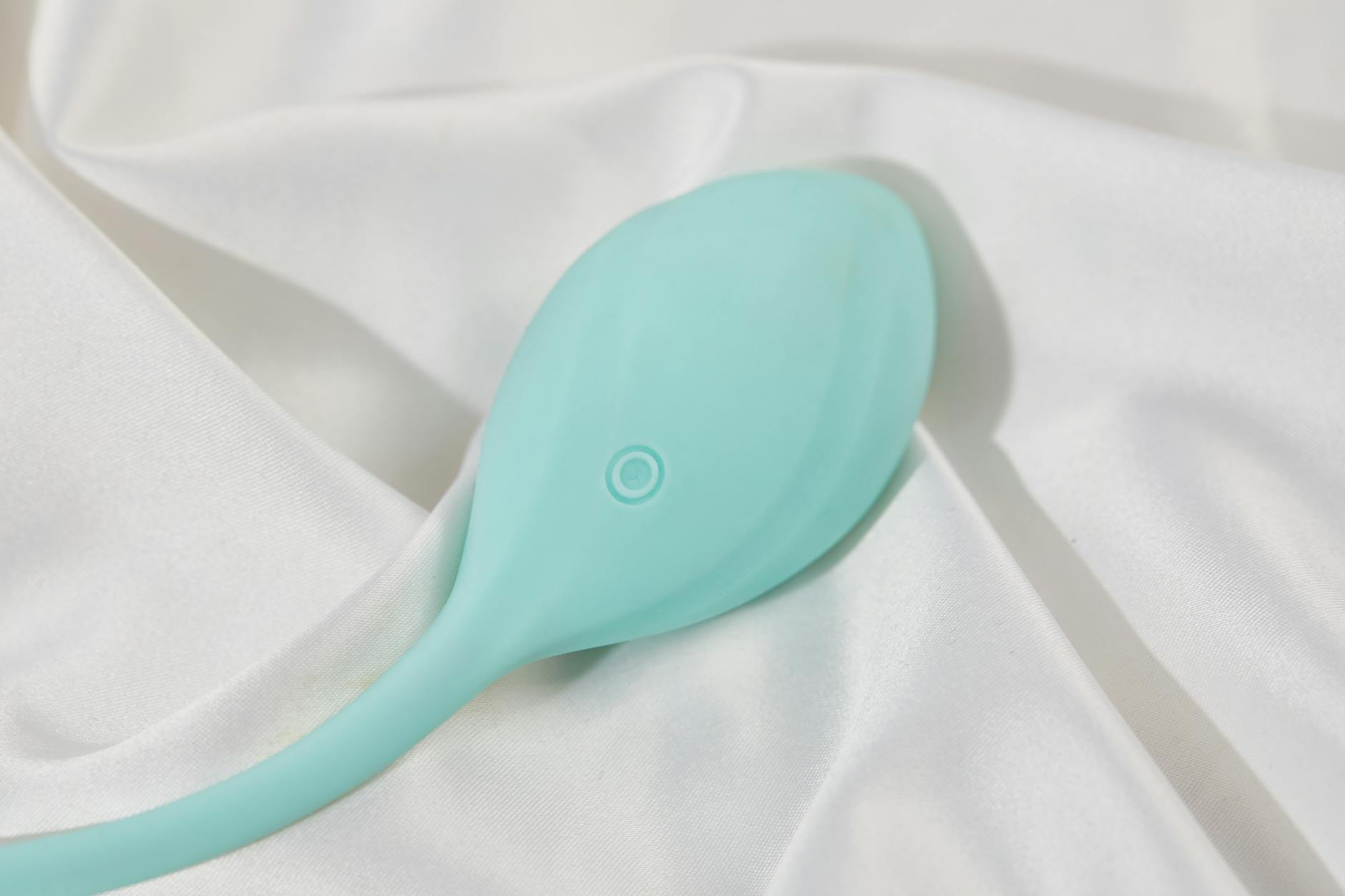
A lemon clitoral vibrator, like the ones Hello Nancy makes, does something specific: it removes the demand for your body to produce a certain response on someone else's timeline. You're not trying to perform anymore. You're just following sensation.
The suction-based design (which is what makes lemon vibrators different from traditional wand vibrators) means the stimulation is broader and less directional. It doesn't feel like precision work that you have to execute perfectly. It feels like something is happening to you, not something you're failing to generate.
That shift matters more than you'd think. When you're anxious, your nervous system is hypervigilant. It's scanning for evidence that things aren't working. A focused, intense stimulation can feel punishing or expose whatever numbness you're carrying. Suction-based stimulation from a lemon vibrator feels safer because it's diffused across a wider area. Your body can relax into it.
Solo play is the real confidence builder
If you're dealing with performance anxiety, solo play with a lemon vibrator is where you rebuild trust with your own body. Not for the orgasm itself, though that matters. For the proof that pleasure doesn't require anyone else's approval.
When you're alone, there's no external evaluation happening. You can take twenty minutes warming up. You can switch patterns three times. You can stop and start and restart. There's no stakes. And that's where you remember what your body actually wants, separate from what you think you should want or what you think will impress someone.
I recommend setting a timer for at least thirty minutes the first time you're doing this solo. Not to force yourself to come, but to give your nervous system permission to slow down. Most of us are so accustomed to rushing through pleasure (because we're anxious about taking up too much time or space) that we've forgotten what unhurried arousal actually feels like.
When you finally introduce a lemon vibrator into partnered sex after you've spent time with it solo, you're not relying on it to rescue you. You've already proven to yourself that your body works, that pleasure is accessible, that you don't need to perform. Now you're using it as an addition, not a crutch.
The role of communication when anxiety is in the room
If you're in a partnership, the most valuable thing you can do is actually talk about this before it becomes a crisis. Not during sex. Not in the moment. Just say it: "I've been feeling anxious about pleasure. I want to rebuild confidence. I'm going to use a lemon vibrator solo for a bit, and I'm going to invite you into that later."
Good partners respond to clarity. They don't want to be responsible for generating your pleasure either. They want to know what you need. And once you say it out loud, the story stops being "I'm broken" and becomes "I'm taking care of myself." That's a completely different energy.
When you do invite your partner to participate, frame it the same way. "I want to use this together because it helps me relax." Not "I'm using this because you're not doing it right." The lemon vibrator becomes a tool for mutual pleasure, not evidence of failure.
The nervous system reset that actually sticks
One session with a lemon vibrator won't undo years of performance anxiety. But consistent, pressure-free solo play will. Over four to six weeks of regular use (think twice a week), your nervous system starts to believe that pleasure is possible without stakes. That belief generalizes. It starts showing up in partnered sex too.
That's not magic. That's neural rewiring. You're literally training your body to associate sexual situations with relaxation instead of threat. And the lemon vibrator's design, with its broader suction-based stimulation, makes that rewiring easier because it doesn't ask your body to perform a specific response.
What often surprises people is how much their confidence improves in other parts of their life when they reclaim this. Sexual anxiety isn't localized to the bedroom. It's about whether you trust your body. Whether you believe you're worth pleasure. Whether you get to take up space and ask for what you want. A lemon clitoral vibrator addresses all of that in the most direct possible way: by giving you proof.
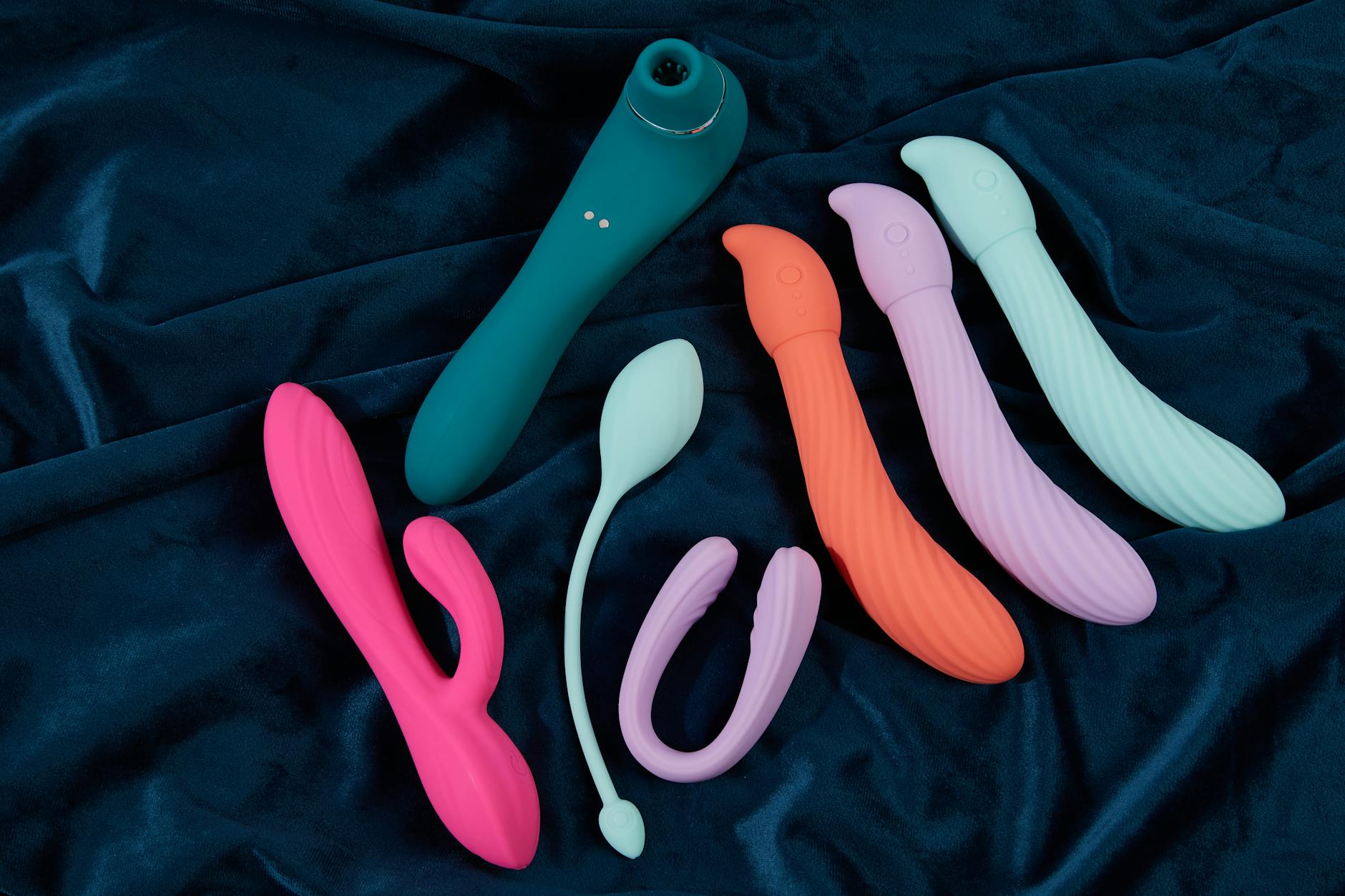
Photo by IFONNX Toys on Pexels
When to bring a lemon vibrator into partnered sex
There's no magic timeline, but here's what I recommend: spend at least two to three weeks using a lemon vibrator solo before you introduce it with a partner. That's enough time for your body to get familiar with it, for your nervous system to start relaxing, and for you to figure out what actually feels good without anyone else's opinion.
When you do invite your partner, set an intention for that session. You're not trying to come. You're not trying to perform. You're trying to build comfort. Take your time. If you get distracted by that voice in your head saying "this is taking too long," acknowledge it and come back to sensation. You're teaching yourself a skill, and skills take practice.
One thing that helps: use it first while your partner is just present, not necessarily participating. You're not changing the fundamental dynamic of the pleasure (it's still about you and your body), but there's a witness who loves you. That's different from performance. That's intimacy.
The science of why this actually works
Performance anxiety activates the amygdala, your brain's threat-detection center. Once it's activated, your prefrontal cortex (the part that reasons and remembers that you're safe) goes quiet. You're literally not capable of rational thought.
Repetitive, safe experiences with pleasure rewire this pathway. Every time you use a lemon vibrator solo and experience pleasure without judgment, you're creating a new neural association. Sex is not threat. Your body is not failing. You're not broken. Over time, that new association gets stronger, and the old anxiety pathway gets quieter.
This isn't about thinking your way out of anxiety. It's about creating new experiences that contradict the old story your nervous system is telling.
Real talk about what this doesn't fix
If your performance anxiety is rooted in deeper relationship issues, a lemon vibrator is a helpful tool, not a solution. If your partner makes you feel unsafe, or if there's a fundamental mismatch in desire, or if you're dealing with trauma, those conversations need professional support.
What a lemon vibrator does is address the specific loop of performance anxiety during pleasure. It gives you a chance to prove to your body that arousal is possible without stakes. But it works best alongside honesty with yourself and your partner about what's actually happening.
Frequently asked questions
Can a lemon vibrator actually reduce performance anxiety or is that just placebo?
It's not placebo, though expectation does matter. The design of lemon vibrators, with their suction-based stimulation, creates a different kind of arousal response than goal-focused stimulation. That different response gives your nervous system permission to relax. Solo play itself also matters, regardless of the tool, because it separates pleasure from external evaluation. The combination is powerful.
How long before I notice my anxiety actually decreasing?
Most people report a shift in two to three weeks of consistent solo play. You might notice your body responds faster, or that the noise in your head quiets down sooner. Deeper changes in how safe you feel take longer, usually four to eight weeks. Patience matters here.
Is it better to use a lemon vibrator or a traditional wand vibrator for performance anxiety?
For anxiety specifically, lemon vibrators have an advantage. The broader suction-based stimulation feels less like performance and more like something happening to you. Traditional wands are more intense and focused, which can amplify anxiety in someone who's already hypervigilant. That said, what matters most is what feels good to your body. If a wand works for you, use that.
Should I tell my partner I'm using a lemon vibrator to work through anxiety?
Yes, if you're in a committed partnership. You don't need to share every detail, but honesty about what you're doing and why builds trust. Something like "I'm taking some time to reconnect with my own pleasure" is enough. You're not saying "you've failed." You're saying "I'm taking care of myself."
What if I use a lemon vibrator solo and still feel anxious during partnered sex?
That's normal. Solo pleasure and partnered pleasure are different contexts. Your nervous system might relax when you're alone but activate when another person is involved. That's not failure. That's information. It means you might need more time solo, or you might need to have a conversation with your partner about what would help you feel safer.
Can men or non-binary people experience performance anxiety that responds to lemon vibrators?
Absolutely. Performance anxiety isn't gendered. Erectile anxiety, for example, responds really well to the nervous system reset that solo play creates. A lemon clitoral vibrator is designed for external stimulation, so it's most directly helpful for people with vulvas, but the principle of rebuilding confidence through pressure-free solo play applies to everyone.
The bottom line
Performance anxiety is one of the most common things that kills pleasure, and it's also one of the most treatable. A lemon vibrator gives you a tool to separate pleasure from performance, to slow down your nervous system, and to prove to your body that arousal is possible without stakes. That proof changes everything. If you're ready to rebuild confidence, explore what Hello Nancy offers or reach out to talk through what might work best for you.