If you've ditched vibrators because they irritate your skin, listen up
Most people assume they're just not built for toys. The real culprit is usually material. Cheap plastics, porous rubber, and metals can trigger irritation, rashes, or worse. It's not you. It's the vibrator.
Lemon vibrators, especially medical-grade silicone designs like those from Hello Nancy, are built differently. They're gentler on sensitive vulva tissue, easier to clean, and actually better for skin health long-term.
What makes silicone different from other vibrator materials
Let's start with what's actually touching your skin. Most adult toys fall into a few categories: jelly rubber, PVC, metal, glass, and silicone. Three of those are a problem for sensitive skin.
Jelly rubber and PVC are porous. That means bacteria, mold, and dust settle into the microscopic cracks on the surface, no matter how much you clean them. You're not just getting vibration. You're getting a low-level bacterial exposure every time you use it. For people with vulva sensitivity, eczema, or reactive skin, this is a fast-track to irritation.
Metal and glass are non-porous, which is good, but they transfer vibration directly into tissue without any give. That intensity can overwhelm sensitive nerve endings.
Silicone is different. It's non-porous, hypoallergenic, and slightly flexible. Your skin doesn't react to silicone the way it might to cheaper plastics. And because it doesn't have microscopic pores, bacteria can't colonize it. A quick rinse with soap and water (or toy cleaner) actually gets it clean.
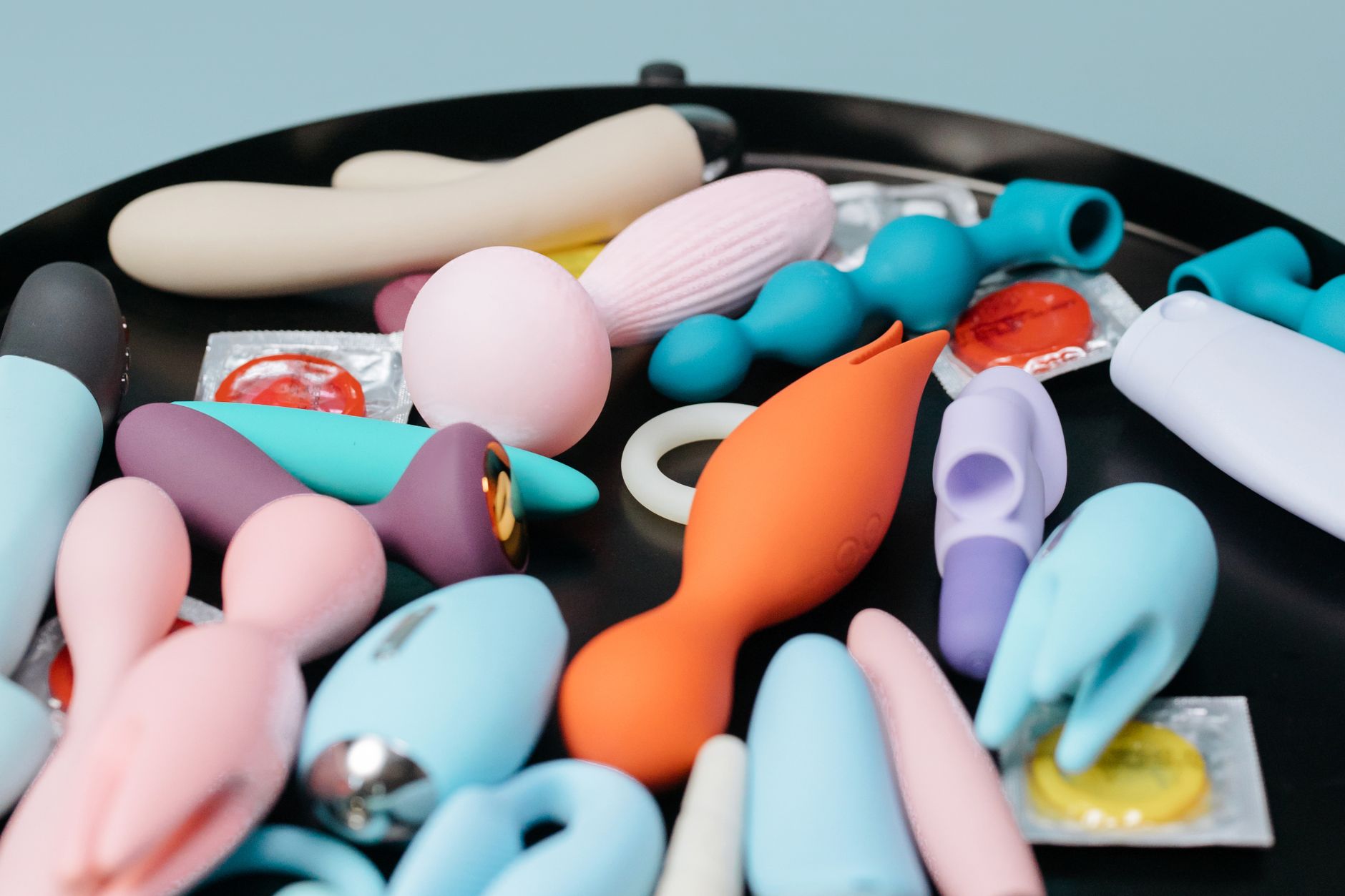
Photo by cottonbro studio on Pexels
Why lemon clitoral vibrators specifically win for sensitive users
Not all silicone vibrators are the same. The shape matters. The vibration pattern matters. The size of the contact surface matters.
Lemon-shaped clitoral vibrators like the Lem from Hello Nancy have a design advantage: the contact point is smaller and more defined than a bulbous wand. That means the vibration is concentrated where you need it, without requiring intense power to feel effective. Lower power settings = less trauma to delicate tissue.
The curve of a lemon vibrator also follows the anatomy of the clitoris. You get a more ergonomic fit, which means you're less likely to press hard or grind to achieve sensation. That restraint is crucial for sensitive skin. Friction is the enemy. Precision is the friend.
Hello Nancy's lemon vibrators also use graduated vibration patterns, not just one brutal setting. You can start at pattern one (barely-there pulses) and work up. For sensitive skin, that flexibility is non-negotiable.
The hygiene advantage you actually can't ignore
This sounds clinical, but it's genuinely important. Silicone doesn't harbor bacteria the way porous materials do. That's not a sales pitch. That's microbiology.
For people with vulvovaginal conditions like bacterial vaginosis, yeast sensitivity, or dermatitis, cross-contamination matters. If your vibrator collects bacteria, you're essentially reintroducing infection risk every time you use it.
With a medical-grade silicone lemon vibrator, you clean it, it stays clean. You can even boil silicone toys if you want, though a warm rinse usually does the job.
What dermatologists actually say about vibrators and sensitive skin
There's not a ton of peer-reviewed research on vibrators and skin irritation specifically, because dermatologists don't usually study this. But dermatologists absolutely have opinions about contact materials.
Here's the consensus: non-porous, hypoallergenic materials are low-irritation. Silicone is in that category. Porous materials and dyes are high-irritation. Anything with synthetic fragrances or colorants that aren't FDA-approved is a risk.
If you have sensitive skin, patch-test new products the way you would skincare. Use it for 10 minutes and stop. Wait 24 hours. If no rash appears, you're probably fine. If your vulva reacts to multiple vibrators, silicone is the material to bet on.
The vibration pattern piece people miss
Power matters less than people think. A 7000-Hz vibration at low amplitude can feel more intense than a 10000-Hz vibration at high amplitude, depending on the pattern.
Lemon clitoral vibrators often use pulsing or rolling patterns rather than straight vibration. That pattern-based approach means the sensation changes, which keeps the nerve endings from dulling to the stimulus. You get more pleasure with less power, and less power means less inflammation.
If you've used cheap vibrators that go 0 to 100 with no middle ground, you've experienced power without nuance. A quality lemon vibrator from Hello Nancy gives you control. That control is the difference between irritation and comfort.
Lubrication actually matters more with sensitive skin
Here's something people don't talk about: silicone toys interact differently with lube than porous materials.
With jelly rubber, you need extra lube because the material itself drags. With silicone, the material is already smooth, so you need less. But if you have sensitive skin, the right lube matters more than the vibrator.
Water-based lubricants are safest for sensitive vulvas. They don't irritate, they rinse clean, and they're compatible with any toy material. Avoid oil-based lubes with silicone (they can degrade the material), and test any new lube on a small area of skin first if you have a known sensitivity.
When you combine a medical-grade silicone lemon vibrator with the right water-based lube, irritation risk drops dramatically.
Texture and finish matter too
All silicone isn't equally smooth. Some vibrators have a matte finish, others glossy. Some have subtle texture that's supposed to feel nice but can actually irritate sensitive skin.
Look for smooth, glossy finishes if you're sensitive. The smoother the surface, the less friction, the lower the irritation risk. Higher-quality silicone toys tend to have better finishes because the manufacturing process is more rigorous.
When you're choosing the perfect lemon vibrator, run your finger across the surface. If it feels slick and uniform, that's what you want.
What to actually do if you have had bad reactions before
Start small. Literally and figuratively. A lemon clitoral vibrator is smaller than a wand, which is already a win for sensitive skin. Use it for five minutes at the lowest setting. Stop if you feel any stinging or burning.
Wait 24 hours. If your skin looks and feels normal, you can increase session length and intensity gradually over a few weeks.
If you're coming from a long time without vibrators, your skin might need a reset period. Your vulva is resilient, but it also has memory. Once you've moved to a gentler tool, the sensitivity usually decreases over time.
If you have an active dermatological condition like severe eczema or psoriasis, ask your dermatologist first. They might recommend avoiding vibrators entirely during flares, and that's valid. But for garden-variety sensitivity, silicone usually works.
FAQs about lemon vibrators and sensitive skin
Can I use a lemon vibrator if I have a latex allergy?
Absolutely. Medical-grade silicone is latex-free. If you're allergic to latex, a quality silicone vibrator from Hello Nancy is one of the safest toy options available. Just double-check the product description to confirm it's silicone and not any other material.
Will a silicone vibrator help if I have vulvodynia or chronic pain?
Maybe, with caution. Vulvodynia is a chronic pain condition, and vibration sometimes helps, sometimes makes it worse. It's deeply individual. If you have vulvodynia, talk to a pelvic health physical therapist or your gynaecologist before introducing any vibrator. They can guide you on whether gentle vibration might help or whether you should skip it. Some people with vulvodynia do find that low-intensity lemon vibrators feel better than other options, but you need professional guidance first.
What's the difference between lemon vibrators and clitoral suction toys for sensitive skin?
Lemon vibrators use vibration. Clitoral suction toys (sometimes called "lemon suckers") use air-pulse technology. Suction can actually be gentler for some people with sensitive skin because it doesn't involve direct friction. But suction toys are also bulkier and harder to control. For sensitive skin, the advantage of a lemon clitoral vibrator is precision and lower power. You'd have to try both to know which feels right for your body.
Is there a break-in period with silicone lemon vibrators?
Not really. Silicone toys don't need seasoning or a long break-in the way some other materials might. That said, your body might need an adjustment period. If you're sensitive, ease in over a few weeks rather than going hard right away. Your skin will adapt faster if you're gradual.
Can I sleep with a silicone vibrator inside me overnight for extended stimulation?
Technically yes, but for sensitive skin, I'd say no. Anything inside your body for hours creates moisture and warm conditions that bacteria love. Extended internal use also increases irritation risk. Keep sessions to 15-30 minutes, clean afterward, and give your body a break. More isn't better. Better is better.
Do I need special toy cleaner or is soap and water enough?
Soap and warm water is totally fine for silicone. Toy cleaner is nice if you want it, but it's not necessary. The main thing is regular, thorough rinsing. Let it air-dry or pat dry with a lint-free cloth. Store it somewhere clean and dry, away from extreme heat. That's it.
Your skin deserves better tools
If you've written off vibrators because of sensitivity, I'm telling you: it was probably the vibrator, not you. A quality silicone lemon clitoral vibrator from Hello Nancy is built for sensitive skin. The material won't irritate. The size and shape give you control. The power options let you find your sweet spot without trauma.
Start slow, listen to your body, and be patient. Your skin will thank you.