Here's the thing about performance anxiety when you're alone
Most people assume performance anxiety is a partnered problem. Your brain loops on "Am I taking too long?" or "What if they're bored?" or "Why can't I come?" When you're solo, the pressure should lift. Except it doesn't. The voice just redirects. You start performing for yourself, or for an imagined audience, or for some version of "normal" you think you should be hitting. The result is the same: your nervous system tightens, arousal stalls, and pleasure becomes a task instead of a sensation.
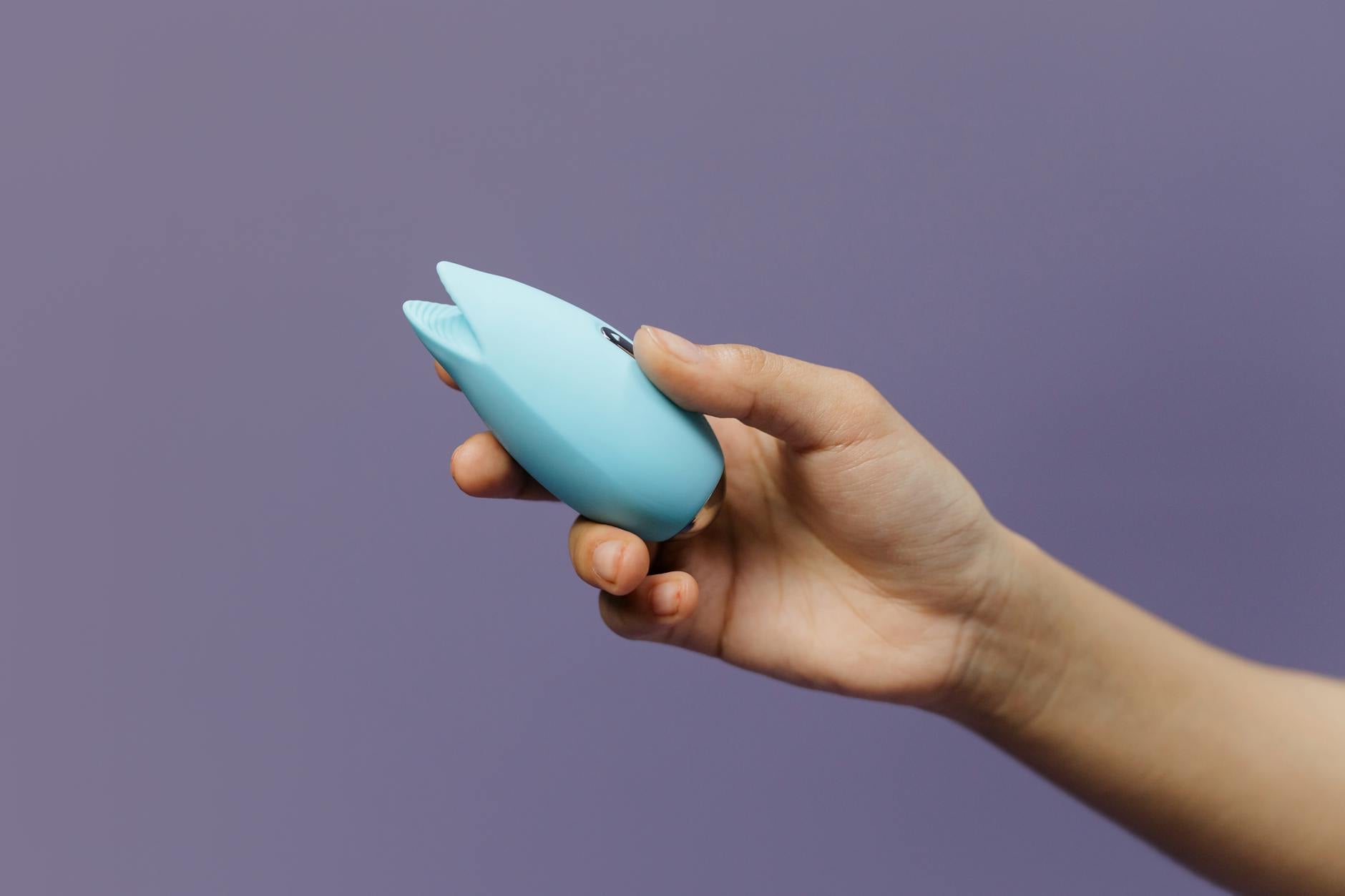
I work with clients on this weekly. And here's what I've learned after two decades of therapy: the fix isn't willpower or "just relaxing." It's interrupting the feedback loop. A lemon clitoral vibrator, specifically the kind that uses air-suction stimulation like the Lem, does something psychologically useful. It shifts the locus of control outside your brain. You're not generating the sensation. You're receiving it. That distinction unlocks a lot.
Why your brain sabotages you even when you're the only one there
Performance anxiety has three roots. The first is learned behavior. If you grew up around messaging that sex was shameful, or if past partners made you feel rushed or inadequate, your nervous system learned to tighten during sex. That wiring doesn't disappear when you're alone.
The second is the observer effect. Psychologically, performance anxiety isn't really about judgment from a partner. It's about self-judgment that's gotten so automatic you don't notice it anymore. You're watching yourself have sex the way an audience would. Your brain splits: part of you is in the moment, and part of you is narrating from the stands.
The third root is control. When we're anxious, we clench. We try to force an orgasm, or speed it up, or make it happen on a particular timeline. This is the opposite of what arousal needs, which is receptivity and ease.
A lemon vibrator addresses all three because it removes the illusion of control. You can't force the Lem to work harder or faster by thinking about it. You have to let it do what it does. That surrender is the psychological reset.
What happens physiologically when anxiety blocks pleasure
When performance anxiety activates, your sympathetic nervous system (the fight-or-flight branch) takes over. Blood vessels constrict. Your pelvic floor tightens. Lubrication decreases. The clitoris actually retracts slightly, becoming less accessible. You're in a protective posture, not an open one.
Air-suction stimulation like the Lem bypasses some of this tension because it doesn't require the same level of direct friction as traditional vibrators. The suction works on the clitoral complex in a way that feels gentler, less demanding. For people whose anxiety manifests as physical tension, this can be the difference between a session that feels forced and one where something actually shifts.
The repetitive, rhythmic input also matters. A steady pattern of stimulation actually helps calm the nervous system. It's not the goal-focused intensity that anxiety loves. It's a rhythm. Your nervous system can settle into that. After about ten to fifteen minutes of consistent stimulation, many people report that the anxious voice quiets. Not because they're trying harder, but because the repetition gives their brain something else to anchor to.
The three-step setup that actually works
First, choose a time when you have genuine alone time and you're not in a rush. Performance anxiety loves time pressure. Give yourself permission for forty-five minutes, knowing you might only need twenty. That buffer removes the deadline.
Second, put your phone in another room or genuinely silent it. Not on vibrate. Not face-down. Not "I won't look at it." Actually gone. Performance anxiety loves distraction. Your phone offers a perfect escape route when things start getting real, and your brain will use it. Remove the option.
Third, do something that settles your nervous system first. This isn't about getting aroused. It's about getting out of fight-or-flight. A shower, a walk, ten minutes of a podcast that makes you laugh, stretching. Something that feels good but isn't sexual. You're telling your nervous system "we're safe and we have time." That matters more than you'd think.
How to actually use the Lem when anxiety is present
Start at the lowest intensity. Not because you're broken, but because a strong stimulus can activate anxiety rather than calm it. You're testing whether your nervous system can relax into the sensation.
Don't have an orgasm goal. This is harder than it sounds because we're all trained to optimize. But performance anxiety literally gets worse when you have an outcome target. Instead, aim for five minutes of just noticing the sensation. What does the suction feel like? Where do you feel it most? Is it too intense, or too gentle, or right? That's the whole goal.
If your brain starts narrating ("This is working," or "I should be coming by now," or "What am I doing?"), that's not failure. That's just the anxious voice checking in. Acknowledge it the way you'd acknowledge a coworker passing your desk. "Oh, there you are," and then gently return attention to the physical sensation. Every time.
Many people find that after ten to fifteen minutes of this, the chatter quiets. Arousal starts to build on its own, without you pushing it. That's the nervous system shifting. Once that shift happens, you can adjust intensity or speed if you want to, or just stay with what's working. You're following sensation instead of chasing an outcome.
When anxiety has kept you disconnected for a long time
If you haven't had orgasms in months, or if sexual pleasure has felt totally out of reach, the first few sessions with a lem vibrator might not produce an orgasm. That's completely normal. You're rebuilding a neural pathway that atrophied. Think of it like returning to exercise after months away. You don't run a 10K on day one.
Instead, treat the first few weeks as a desensitization phase. You're teaching your nervous system "sex is safe, pleasure is allowed, we don't have to perform." Some sessions will feel boring. Some will feel uncomfortable. Some will feel kind of good. All of that is progress. You're creating a new association, and associations take repetition.
The one thing that actually helps here is tracking what shifts. Not "Did I come?" but smaller things: "My mind was quiet for the first eight minutes," or "I felt arousal start for the first time in months," or "I didn't check the time once." Those are the wins. They're not as obvious as an orgasm, but they're the foundation that orgasms eventually build on.
The role of body acceptance in this
Performance anxiety and body image are usually tangled together. You can't perform well if you hate the body you're performing with. So while you're using the Lem, you're also (gently, without pressure) building a different relationship with your own body.
One small thing that helps: before you start, notice something about your body that feels good in a non-sexual way. Your hands are warm. Your skin is soft. Your collarbone catches the light. Something small and true. Not a performance review. Just a fact.
Then, during stimulation, notice what your body is doing rather than judging it. Your breathing is getting deeper. Your muscles are relaxing. Your vulva is plumping and opening. These are signs of arousal, not signs of anything you need to fix. You're gathering evidence that your body is capable and worthy, not that it's failing.
Over time, this retrains the narrative. Your brain starts to associate your body with sensation and safety instead of judgment and fear.
When to reach out for extra support
If you've done this consistently for four to six weeks and nothing has shifted, a therapist who specializes in sexual health or sex-positive cognitive behavioral therapy can be genuinely transformative. Performance anxiety isn't a character flaw. It's a learned nervous system response, and it can be unlearned with the right framework.
Some people also find that a combination of therapy and a lemon clitoral vibrator like the Lem creates the best outcome. The vibrator does the somatic work (nervous system reset), and therapy addresses the cognitive patterns (the stories your brain tells). Together, they're more powerful than either alone.
Your nervous system didn't become anxious overnight, and it won't relax overnight. But with the right tool and a little patience, you can absolutely rebuild your capacity for pleasure. You deserve that.
People also ask
Can performance anxiety prevent orgasms even when you're alone?
Completely. Performance anxiety creates a physical tension response that actually makes orgasm harder to achieve. When your nervous system is in a protective state, blood flow to the genitals decreases, the pelvic floor tightens, and the clitoral tissue retracts. It's not that you're broken. It's that anxiety is literally blocking the physical cascade of arousal and release. A lemon clitoral vibrator can help because the rhythmic, external stimulation gives your nervous system permission to relax into the sensation instead of forcing it.
Why does using a toy sometimes feel more intense when I'm anxious?
Intensity can actually trigger more anxiety, creating a feedback loop. When your nervous system is already heightened due to performance pressure, a strong stimulus can feel overwhelming rather than good. This is why starting at a lower intensity with something like the Lem matters. You're giving your nervous system a chance to realize "this is safe" before increasing intensity. Once you're genuinely relaxed, higher intensities often feel better.
Is it normal to feel emotional after using a lemon vibrator for the first time when anxiety has blocked pleasure?
Yes. When your nervous system finally feels safe enough to release tension that you've been holding during sex, that release can come with emotion. You might feel sad, or relieved, or suddenly need to cry. That's not a problem. That's your nervous system recalibrating. Let it happen. It usually passes in a few minutes.
How do I know if performance anxiety is the real issue versus something medical?
If you have pain during stimulation, or if you've never experienced arousal or orgasm at any point in your life, get a medical checkup first. A gynecologist can rule out things like hormonal imbalances, nerve damage, or pelvic floor dysfunction. Once you've cleared physical causes, performance anxiety becomes a much more likely explanation. Many people have both, actually. Addressing the anxiety often helps even if there's also a physical component.
Can I use a lemon vibrator with antidepressants or other medications that affect sensation?
Most antidepressants and anxiety medications don't make vibrators less effective. In fact, some people find that once their medication stabilizes their nervous system, they have an easier time with sexual pleasure. The Lem's air-suction mechanism is particularly helpful if medication has dulled sensation, because the stimulation is broader and slightly different than traditional vibration. If your medication has significantly affected arousal, it's worth discussing with your prescriber, but using a quality lemon vibrator is generally safe alongside psychiatric medications.
What if I start using a lemon clitoral vibrator and the anxiety comes back partway through?
That's not failure. That's your nervous system checking whether it's still safe. When the anxious voice shows up mid-session, you have two options. You can pause, take three deep breaths, and gently resume. Or you can stop and try again another time. Both are fine. You're not pushing through. You're listening. That's actually how you rebuild trust with your body.
References
If you found this helpful and you're ready to explore further, how to introduce a lemon vibrator to your partner offers strategies for bridging solo and partnered pleasure. For those managing anxiety related to life transitions, our post on rebuilding after major life transitions might resonate. And if medication is part of your situation, we've covered how antidepressants affect sensation in detail.
Performance anxiety is real, and you're not alone in this. If you'd like to talk through your specific situation or have questions we haven't covered, reach out. We're here.